Monkeybone
2001
No user ratings available yet
Representation score: 3.3 out of 10
Representation Score
Fair
1992
PG-13Director
Ralph Bakshi
Runtime
102 minutes
Average Rating
No ratings yetNew Showbiz Analysis
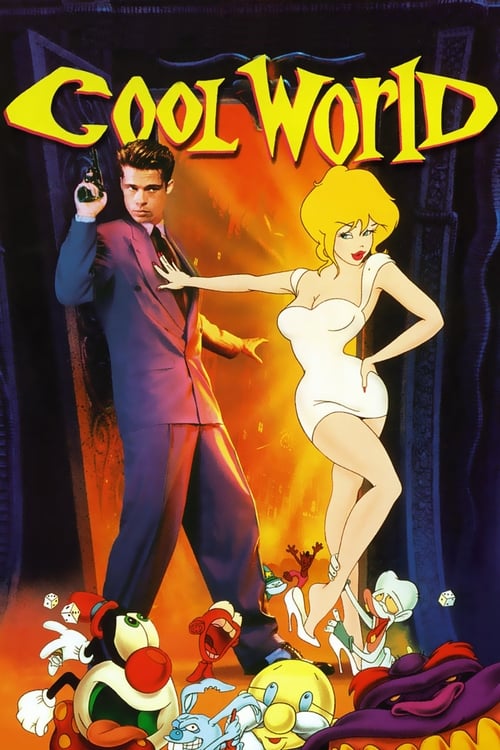
Ralph Bakshi’s film prioritizes stylistic excess and ontological questions over demographic representation. It succeeds in subverting the traditional femme fatale cliché through Holli Would, who moves beyond being a mere object of desire to become a character with autonomous, predatory goals. However, the film remains tethered to the era's clichés, offering little in the way of racial, religious, or LGBTQ+ diversity. The human cast is largely homogeneous, and the animated diversity functions more as a metaphor for biological differences than as representations of actual cultural identities. Ultimately, the work is a sophisticated critique of the boundaries between reality and artifice, even if it fails to engage with broader social identities.
Category Breakdown
The film lacks prominent LGBTQ+ characters or storylines. The central plot revolves around a pursuit of personhood through biological seduction, which is traditionally heterosexual.
Holli Would subverts the passive femme fatale cliché by playing a key role in driving the plot. She uses her sexuality as a tool for self-actualization and autonomy.
The human characters remain largely homogeneous, following traditional noir casting norms. While the animated world is visually diverse, these designs serve as metaphors for biological differences rather than ethnic identities.
The narrative explores moral relativism and portrays Western institutions like law enforcement as corrupt. It favors a fragmented, postmodern view of existence over stable social structures.
There is no significant or intentional representation of physical or neurodivergent disabilities. Character struggles are primarily existential and psychological in nature.
Present on Screen
Limited or Absent
Official Synopsis
While incarcerated for murder, cartoonist Jack Deebs found escape by creating Cool World, a series featuring a voluptuous femme fatale named Holli Would. But the artist becomes a prisoner of his own fantasies when Holli transports Jack into Cool World with a scheme to seduce him and bring herself to life. Hard-boiled detective Frank Harris – the only other human in Cool World – cautions Jack with the law: Noids (humans) don't have sex with doodles (cartoons). However, flesh proves weaker than ink as Holli takes human form in Las Vegas, staring in a trans-universal chase that threatens the destruction of both worlds.
2001
2008
1988
1988
1993
2002
2000
2001
No reviews yet. Be the first to share your thoughts on this movie!
Use the rating form above to leave a star rating and optional review.