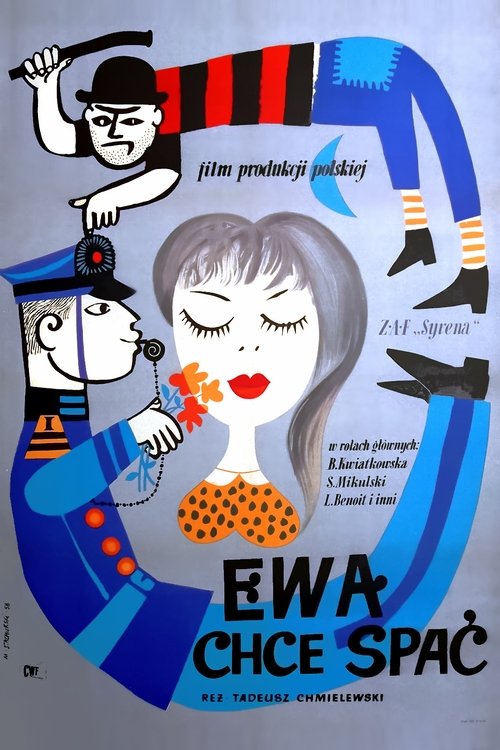
Ewa Wants to Sleep
1958
No user ratings available yet
Diversity score: 3.1 out of 10

1968
Director
May Spils
Runtime
80 minutes
Average Rating
No ratings yetSynopsis
Martin is 25 years old and very reserved about work. Together with his buddy Henry, he lives in their Schwabing apartment in the day. But everything changes when he falls in love with the attractive Barbara and observed a slump: For when he gives up the police report, the officials themselves suspect him of the crime. In addition, he still owes a text to the hit producer Viktor Block. Suddenly Martin is up to his ears in chaos.
Overall Score
Limited
Category Breakdown
LGBTQ+ Representation
The narrative focuses on a heteronormative romantic arc between Martin and Barbara. There is no evidence of queer identities or non-cisnormative narratives within the story.
Gender Representation
The film follows a conventional structure where a male protagonist navigates chaos. Barbara is framed primarily as an attractive love interest, offering limited subversion of masculine authority.
Racial & Ethnic Diversity
Set in Munich's Schwabing district, the film appears to reflect the homogeneous demographic norms of 1968 West Germany. No significant non-white representation is indicated.
Religious & Cultural Diversity
The plot engages with traditional Western institutions like the police and the entertainment industry. It functions as a standard character comedy rather than a cultural critique.
Disability Representation
The available information contains no mention of characters with visible or invisible disabilities. No assessment of neurodivergence or physical disability is possible.
Strengths
Areas for Improvement
AI Analysis
Go for It, Baby is a period-specific comedy that adheres to the social and demographic constraints of 1960s West German commercial cinema. The story relies on traditional romantic tropes and a male-centric perspective to drive its comedic chaos. The film lacks intersectional complexity, reflecting the homogeneous environment of its era. While May Spils' presence as a female director provides a unique industry perspective, the narrative itself remains rooted in conventional structures. Ultimately, the film serves as a snapshot of its time, prioritizing standard character-driven humor over diverse or subversive representation.
1958
1984
1991

1984
1982
1976
1977

1963
1980

1956
1980
1943
No reviews yet. Be the first to share your thoughts on this movie!
Use the rating form above to leave a star rating and optional review.