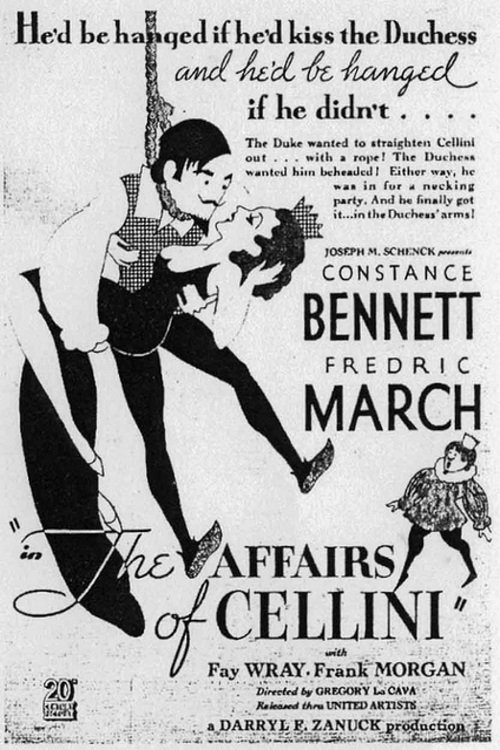
The Affairs of Cellini
1934
No user ratings available yet
Diversity score: 4.3 out of 10

1993
Director
Christian Fechner
Runtime
160 minutes
Average Rating
No ratings yetSynopsis
Set in the French countryside in the 1600s, a lone rider deposits a newborn baby boy on the steps of a monastery, having bitten his nose off. The child is bought up by an ex-pirate and his wife and is taught to read, write, count, joust and fence, and is also given a wooden nose. However, he is ordered by a local baron to attend a tough seminary, but he soon rebels and makes an action-packed escape...
Overall Score
Fair
Category Breakdown
LGBTQ+ Representation
The film lacks any mention of LGBTQ+ characters or non-cisnormative identities. There is no evidence of queer subtext or narratives addressing heteronormativity within the story.
Gender Representation
The story centers on a male protagonist engaged in traditional masculine activities like jousting and fencing. While a wife is mentioned, female characters appear to lack significant agency.
Racial & Ethnic Diversity
Set in 17th-century France, the film likely reflects the demographic homogeneity of that era. There is no indication of diverse casting or non-white characters in significant roles.
Religious & Cultural Diversity
The narrative explores a protagonist's rebellion against a strict seminary. This suggests a potential critique of religious institutions and traditional authority, though it may function as a standard adventure trope.
Disability Representation
The protagonist's missing nose is a central plot element. While he demonstrates high agency despite his deformity, it remains unclear if the portrayal is nuanced or a traditional hero trope.
Strengths
Areas for Improvement
AI Analysis
Justinien Trouvé, or God's Bastard is a traditional historical drama set in the 1600s. It focuses on a singular protagonist's journey through class and religious structures, prioritizing period-accurate storytelling over modern intersectional complexity. The film's strengths lie in its focus on individual agency and the exploration of physical deformity as a central narrative driver. It uses its historical setting to examine the tension between personal freedom and institutional control. However, the film lacks demographic diversity and fails to include LGBTQ+ or significant non-white perspectives. The representation of gender and disability follows conventional tropes rather than offering subversive or highly nuanced character studies.
No reviews yet. Be the first to share your thoughts on this movie!
Use the rating form above to leave a star rating and optional review.