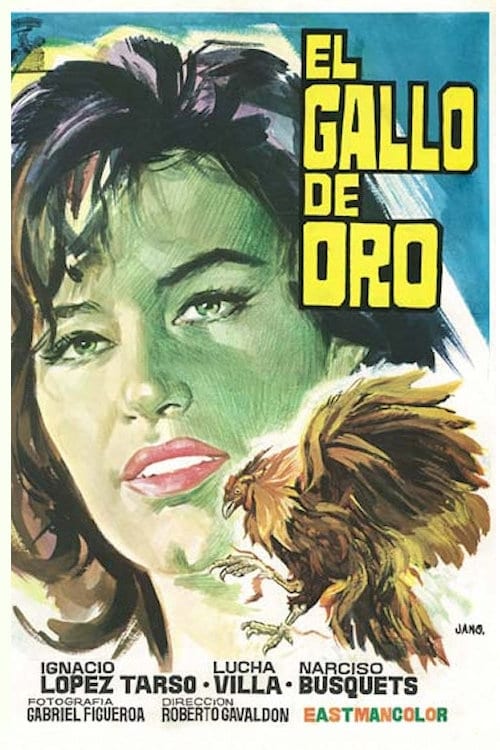
The Golden Cockerel
1964
No user ratings available yet
Diversity score: 4.3 out of 10
No Poster Available
1952
Director
Vjekoslav Afrić
Runtime
106 minutes
Average Rating
No ratings yetSynopsis
The council of an old Slavic tribe makes unrighteous decision by giving the best looking girl Voljenka to Kohan the warrior. Voljenka is in love with Dalibor, who tries to prove his courage by fighting with Kohan, and therefore drive the council to change their original decision.
Overall Score
Limited
Category Breakdown
LGBTQ+ Representation
The story follows a conventional romantic conflict between a woman and two men. There is no evidence of non-heteronormative identities or critiques of heteronormativity.
Gender Representation
A male-dominated council dictates the fate of Voljenka, limiting her initial agency. The plot is driven by male competition and traditional archetypes of physical courage.
Racial & Ethnic Diversity
The film centers on the internal dynamics of a Slavic tribe. While ethnically homogeneous, it provides a deep look into specific ethnic heritage and customs.
Religious & Cultural Diversity
The narrative explores tribal honor and the conflict between communal decisions and individual desire. It remains rooted in traditional folk drama and social institutions.
Disability Representation
There are no visible or invisible disabilities depicted or utilized as plot devices in this narrative.
Strengths
Areas for Improvement
AI Analysis
Hoja! Lero! is a traditional period drama that prioritizes ethnic specificity over modern social subversion. By centering Slavic tribal life, the film avoids a Western-normative lens, offering a focused look at non-Anglo-Saxon cultural structures. However, the film's narrative architecture relies heavily on conventional gender hierarchies. The central conflict is fueled by masculine competition, where women serve as catalysts for male bravery rather than independent actors. Ultimately, the work functions as a folk drama. While it offers cultural depth, it adheres to traditional romantic tropes and communal authority structures.
1964
1975
1940
1976
1924
1959

1969
1997
2012
1982
1969
1957
No reviews yet. Be the first to share your thoughts on this movie!
Use the rating form above to leave a star rating and optional review.