The Most Unknown
2018
No user ratings available yet
Diversity score: 5.6 out of 10
2012
Director
Ian Cheney
Runtime
83 minutes
Average Rating
No ratings yetSynopsis
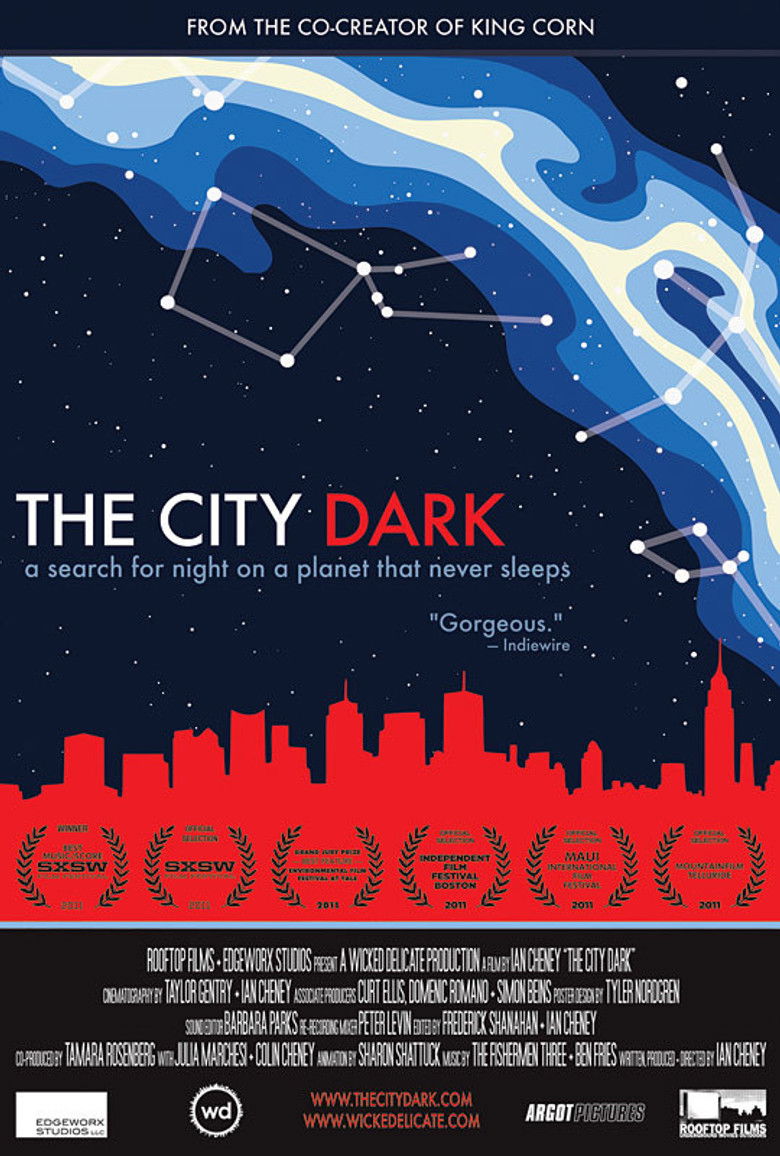
THE CITY DARK is a feature documentary about the loss of night. After moving to NYC from rural Maine, filmmaker Ian Cheney asks a simple question - do we need the stars? - taking him from Brooklyn to Mauna Kea, Paris, and beyond. Exploring the threat of killer asteroids in Hawaii, tracking hatching turtles along the Florida coast, and rescuing injured birds on Chicago streets, Cheney unravels the myriad implications of a globe glittering with lights - including increased breast cancer rates from exposure to light at night, and a generation of kids without a glimpse of the universe above. Featuring stunning astrophotography and a cast of eclectic scientists, THE CITY DARK is the definitive story of light pollution and the disappearing stars. Written by Wicked Delicate Films
Overall Score
Fair
Category Breakdown
LGBTQ+ Representation
The film lacks prominent LGBTQ+ narratives or characters. The focus remains strictly on scientific, philosophical, and ecological implications of light pollution.
Gender Representation
Subjects are presented through professional expertise rather than gendered tropes. The film avoids reinforcing patriarchal leadership by prioritizing intellectual agency across interviewed experts.
Racial & Ethnic Diversity
The documentary captures a demographic spectrum reflective of the various American communities it visits. It provides meaningful inclusion of diverse voices within scientific and civic sectors.
Religious & Cultural Diversity
The narrative critiques traditional capitalist expansion and industrial progress. It emphasizes secular scientific inquiry and philosophical reflection over religious dogma.
Disability Representation
There is no explicit focus on disability. The film's exploration of sensory loss regarding the stars serves as a metaphor for ecological disconnection rather than disability representation.
Strengths
Areas for Improvement
AI Analysis
The City Dark is an observational documentary that prioritizes scientific and ecological inquiry over social identity politics. It functions as an educational piece exploring how urbanization alters the human relationship with the cosmos. While the film lacks intersectional character arcs, it offers a progressive critique of industrial progress. It succeeds in granting intellectual authority to a diverse range of scientific voices rather than relying on traditional social tropes. Ultimately, the film's diversity is found in its systemic analysis of environmental shifts rather than in the representation of specific marginalized identities.
2018
2010
2013
2008
2020
2009

2009
2008
2009
2015

2017
2018
No reviews yet. Be the first to share your thoughts on this movie!
Use the rating form above to leave a star rating and optional review.