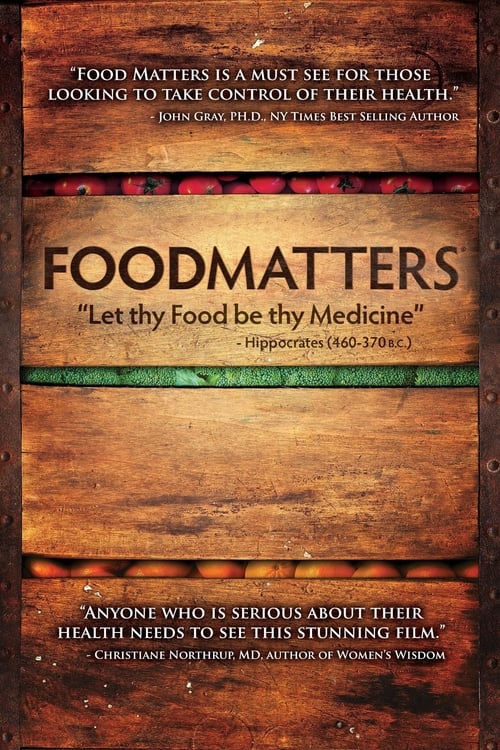
Food Matters
2010
No user ratings available yet
Representation score: 5.2 out of 10

Representation Score
Good
2008
TV-GDirector
Jean-Paul Jaud
Runtime
112 minutes
Average Rating
No ratings yetNew Showbiz Analysis
The documentary primarily investigates environmental and public health issues, focusing on the link between industrial food production and increasing illness rates among younger generations. Given its ecological and biological focus, it lacks depth in identity-based representation. While the film effectively critiques industrial progress and capitalist systems, it does not address specific social identities. Instead, it highlights universal biological vulnerabilities rather than the unique experiences of underrepresented groups. Ultimately, the film serves as a specialized investigative piece, offering a critical perspective on systemic structures without incorporating progressive narrative elements related to gender, race, or sexual identity.
Category Breakdown
The documentary does not include any LGBTQ+ themes or characters. It focuses solely on environmental health and the organic food movement.
The film discusses biological reproductive issues such as infertility but does not delve into gender hierarchies or specific critiques of gendered power dynamics.
The film centers on a specific European socio-environmental context and does not feature a diverse, non-Anglo-Saxon cast or multi-layered racial frameworks.
The film strongly criticizes Western industrial capitalism and food production, presenting it as a systemic harm rather than a positive advancement.
Chronic illnesses and health conditions are addressed as significant systemic issues affecting the general population.
Present on Screen
Limited or Absent
Official Synopsis
For the first time ever, our children are growing up less healthy than we are. As the rate of cancer, infertility and other illnesses linked to environmental factors climbs upward each year, we must ask ourselves: why is this happening?
2010

2000
2011

2011
2016
2014
2013
2019
No reviews yet. Be the first to share your thoughts on this movie!
Use the rating form above to leave a star rating and optional review.