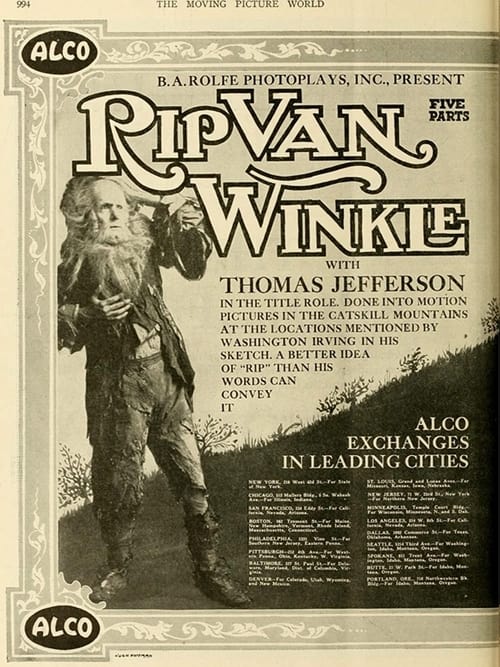
Rip Leaving Sleepy Hollow
1896
No user ratings available yet
Representation score: 0.3 out of 10
Representation Score
Minimal
1896
Not RatedDirector
William K.L. Dickson
Runtime
1 minutes
Average Rating
No ratings yetNew Showbiz Analysis
Rip's Toast is a historical film from the silent era, focusing more on technological advancements than on modern identity politics. Due to the film's age and limited surviving synopses, we cannot fully understand its impact on social hierarchies of the 1890s. Ultimately, the film operates as a traditional work of its time, lacking the narrative tools or evidence needed to meet today’s standards for diverse representation.
Category Breakdown
The film does not depict any non-binary gender identities or same-sex relationships based on available records.
The film likely follows traditional gender roles typical of its time. Female characters do not have well-defined arcs that allow us to assess their influence on the story.
Given the era, the film probably reflects the homogeneous casting practices of 1896. There is no indication of diverse ethnic representation or actors from different backgrounds.
The film seems to align with the conventional moral standards of the late 19th century. It does not show any critiques of Western institutions.
There is no verified information about characters with physical or neurodivergent disabilities.
Present on Screen
Limited or Absent
1896
1896
1896

1896
1896
1896
1894
1894
No reviews yet. Be the first to share your thoughts on this movie!
Use the rating form above to leave a star rating and optional review.