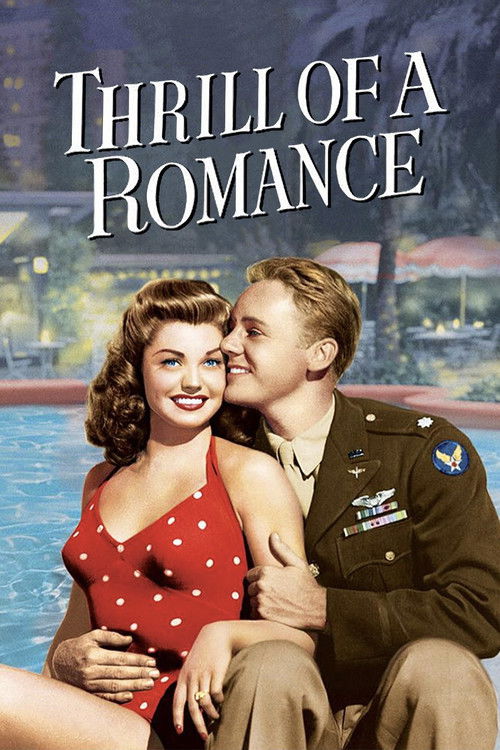
Thrill of a Romance
1945
No user ratings available yet
Representation score: 1.0 out of 10

Representation Score
Minimal
1947
NRDirector
Richard Thorpe
Runtime
105 minutes
Average Rating
No ratings yetNew Showbiz Analysis
This 1947 musical romance operates as a standard studio-era genre piece. It prioritizes a conventional romantic arc between an ex-GI and a bathing beauty, adhering to the social hierarchies of the mid-20th century. The film lacks diverse representation, instead leaning into established clichés of the period. The focus remains on traditional romantic ideals rather than any disruption of cultural or social norms. Ultimately, the production reflects the mainstream Hollywood output of its time, emphasizing aesthetic appeal and traditional romantic stability over diverse or subversive storytelling.
Category Breakdown
The film follows a traditional romantic storyline typical of its era, with no representation of non-traditional gender identities or critiques of conventional romantic structures.
The female lead is portrayed as a 'bathing beauty,' highlighting her role defined by visual appeal. This reliance on aesthetic clichés aligns with the era's traditional gender roles.
The narrative features a homogeneous cast consistent with 1947 Hollywood standards, with no indication of diverse character representation or race-bent casting.
The story likely upholds post-war Western values and romantic stability. It lacks any significant institutional or secular critiques, focusing instead on conventional social integration.
The available information provides no evidence regarding the inclusion or portrayal of characters with physical or neurodivergent disabilities.
Present on Screen
Limited or Absent
Official Synopsis
An ex-GI falls for a bathing beauty.
1945
1958

1954
1937
1948
1951
1944
1954
No reviews yet. Be the first to share your thoughts on this movie!
Use the rating form above to leave a star rating and optional review.