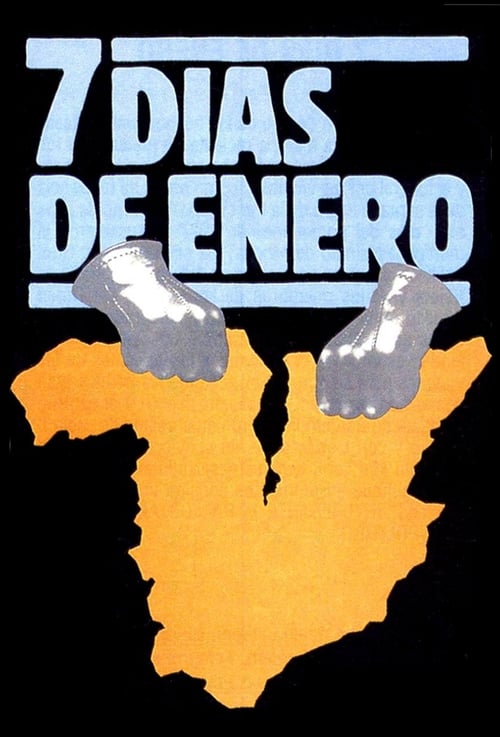
Seven Days in January
1979
No user ratings available yet
Representation score: 5.0 out of 10

Representation Score
Fair
2009
Director
Vicente Aranda
Runtime
88 minutes
Average Rating
No ratings yetNew Showbiz Analysis
Luna caliente is a period thriller that prioritizes political and institutional critique over broad social representation. Its strength lies in its deconstruction of state authority and the oppressive atmosphere of Francoist Spain. However, the film's historical specificity limits its multi-layered breadth. The focus on a homogeneous Spanish landscape and a male-centric political struggle results in lower scores for racial and LGBTQ+ diversity. Ultimately, the film functions as a study of systemic repression rather than a diverse tapestry of identities.
Category Breakdown
The film focuses on the political tensions surrounding the Burgos trials without highlighting specific LGBTQ+ identities or narratives. It does not challenge the assumption that everyone is straight or cisgender.
The story centers on a male protagonist navigating a militarized environment. The film explores how characters struggle against state-mandated social roles, which could potentially challenge traditional gender hierarchies.
Set in late Francoist Spain, the film depicts a primarily homogeneous social landscape. While it explores political dissent, it does not include multi-layered racial diversity consistent with its historical setting.
The film critiques traditional Western institutions and state authority. By focusing on the oppressive Burgos process, it prioritizes systemic critique over nationalistic reverence.
There is no evidence that disability, neurodivergence, or chronic illness play a role in the character development or narrative arc.
Present on Screen
Limited or Absent
Official Synopsis
In the autumn of 1970, Juan, a Spanish poet living in Paris working for UNESCO, returns on vacation to his hometown, Burgos. The city is under heavy police and military surveillance due to the so-called Burgos process, a summary military trial against a group of ETA members and other militants against Francisco Franco’s regime.
1979
2020
1982
1972
2019
2010
2019
2007
No reviews yet. Be the first to share your thoughts on this movie!
Use the rating form above to leave a star rating and optional review.