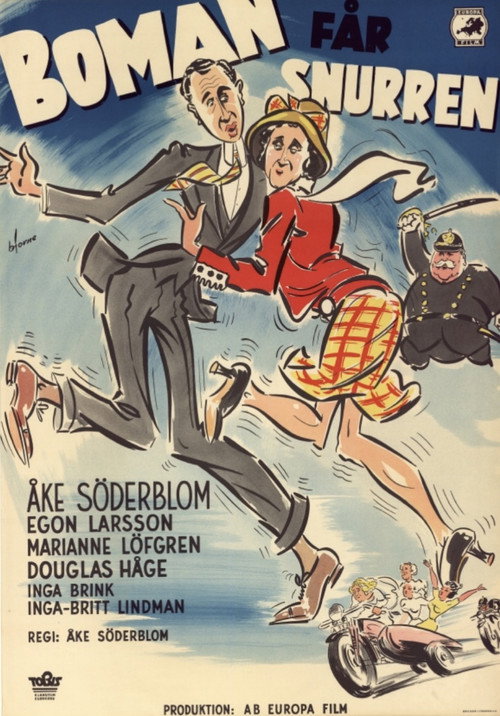
Boman får snurren
1949
No user ratings available yet
Representation score: 0.9 out of 10

Representation Score
Limited
1959
Director
Sven Methling
Average Rating
No ratings yetNew Showbiz Analysis
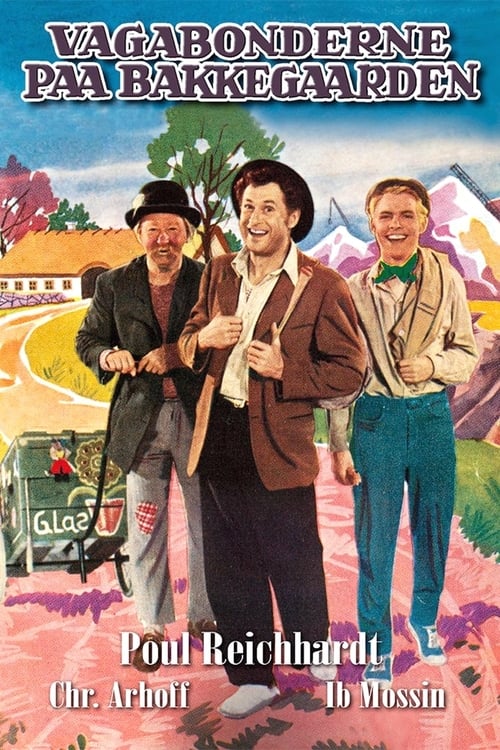
A Hullaballoo at the Castle is a product of its 1959 era, using conventional storytelling techniques. The film relies heavily on established social archetypes and mid-century romantic themes, limiting its scope for diverse representation. The narrative centers on localized European class conflicts and traditional gender roles. While the plot explores the tension between different social classes, it operates as a situational comedy rather than a critical examination of social or cultural norms. Ultimately, the film presents a culturally homogeneous world that reflects the demographic norms of its time without attempting to challenge or broaden them.
Category Breakdown
The film follows typical romantic storylines where musicians pursue two girls. There is no representation of non-binary gender identities or narratives challenging the assumption that everyone is straight.
Female characters play a key role in motivating the main characters but are portrayed within traditional mid-century roles such as lawyers and socialites.
The setting suggests a culturally uniform environment centered around European social structures. There is no indication of diverse racial or ethnic representation.
The comedy arises from class conflicts between counts and sausage makers. While it explores social hierarchies, it reinforces traditional European social norms without challenging them.
The story does not include any characters with visible or invisible disabilities. There is no representation of disability in the narrative.
Present on Screen
Limited or Absent
Official Synopsis
The cheerful, traveling musicians Flink and Villy meet sweet music in the form of two girls. Unfortunately, the chrome nut is tone deaf and chases them away. Luck smiles on them, however, because the nearby castle Bullerborg is abandoned. Flink and Villy move in - and get mixed up in a fight between a cunning lawyer, a bankrupt count and a sausage maker family.
1949
1954
1958
1942
1962
1965
1965
1956
No reviews yet. Be the first to share your thoughts on this movie!
Use the rating form above to leave a star rating and optional review.