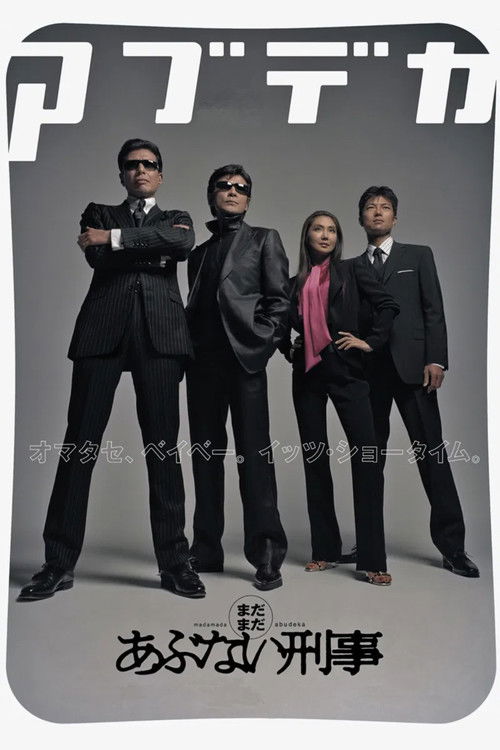
Madamada Abunai Deka
2005
No user ratings available yet
Representation score: 3.4 out of 10

Representation Score
Limited
2005
Director
Eiichiro Hasumi
Runtime
115 minutes
Average Rating
No ratings yetNew Showbiz Analysis
The All-Out Nine: Field of Nightmares is a conventional mid-2000s Japanese action-comedy. It adheres to the genre's typical clichés and social norms of its time, without attempting to challenge or subvert these norms. The film focuses on established social orders rather than exploring identity-based storytelling or social critique. The movie maintains a traditional approach to character roles and demographic representation. It does not introduce narratives that challenge social hierarchies or incorporate diverse identities, resulting in a production that aligns with the era's cinematic standards. Overall, the film serves as a straightforward genre piece without venturing into more complex or diverse storytelling.
Category Breakdown
The film does not include any characters with non-binary gender identities or LGBTQ+ identities. It does not challenge the assumption that everyone is straight or cisgender.
The film features several prominent female actors, but female characters often play supporting roles. The movie does not challenge traditional gender roles or masculinity.
The cast is predominantly Japanese, reflecting the cultural demographics of Japan. The film does not explore diverse racial or ethnic backgrounds.
The story follows typical genre conventions that emphasize established social and moral norms. It does not challenge traditional religious or cultural institutions.
There is no documented evidence regarding the inclusion of characters with visible or invisible disabilities. This category remains unaddressed in the film's metadata.
Present on Screen
Limited or Absent
2005

2013
2016

2007

1996

1998

2016

1989
No reviews yet. Be the first to share your thoughts on this movie!
Use the rating form above to leave a star rating and optional review.