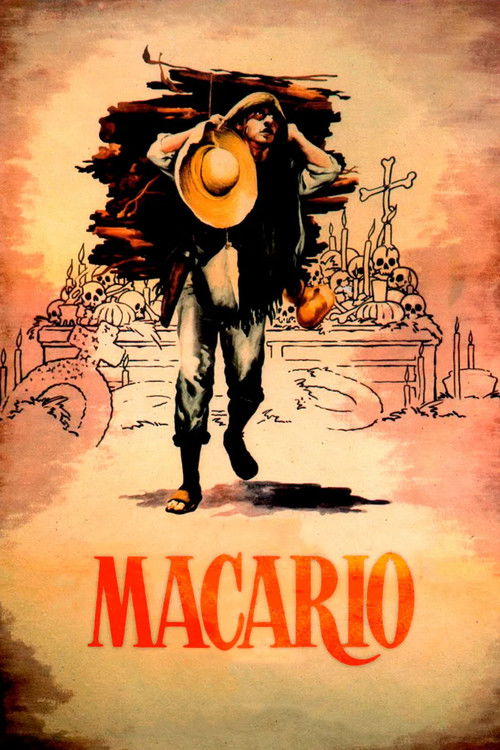
Macario
1960
No user ratings available yet
Representation score: 5.1 out of 10

Representation Score
Good
1963
Director
Armand Gatti
Runtime
115 minutes
Average Rating
No ratings yetNew Showbiz Analysis
Armand Gatti’s film employs surrealism and fantasy to dismantle the mechanisms of dictatorship and class struggle. By centering underrepresented voices, particularly through the revolutionary ability to act of a black peasant character and the use of localized music and culture, the film effectively challenges Western-aligned capitalist hegemony. However, the film’s focus on male-coded characters limits its exploration of gender diversity and LGBTQ+ representation. Additionally, there is no depiction of physical or neurodivergent disabilities.
Category Breakdown
While the film explores themes of political upheaval and class struggle, it does not include specific LGBTQ+ character arcs. The surrealist tone challenges traditional stability but does not focus on LGBTQ+ issues.
The film portrays the dictator as an absurd, animalistic figure, subverting the 'strongman' archetype. However, the revolutionary plot is driven by male-coded characters, emphasizing masculine rebellion.
The film highlights non-Western identities by featuring a black peasant character who actively leads the revolution, rather than being a passive observer.
The story uses folk culture and music to challenge Western-aligned capitalist structures and traditional authority, emphasizing communal identity over oppressive state institutions.
There is no indication of physical or neurodivergent disabilities being portrayed in the film.
Present on Screen
Limited or Absent
Official Synopsis
The dictator Anastasio rules with an iron fist backed by business-men making deals and speeches about building canals, completely disconnected from the chaos amongst the population. Anastasio is rumored to have died after an incident with a mirror and a violent confrontation after literally crowing as a cock amongst his chicken followers. The afterlife is shown as a casino where Anastasio strong-arms his way into heaven. Divination is used to find the next dictator, and a sailor and his black, peasant sidekick find themselves attempting to start a revolution with an organ, dragging it through the countryside, as the movie explores the country, culture and music.
1960
1969
1975
1955

1970

1973
2022
1950
No reviews yet. Be the first to share your thoughts on this movie!
Use the rating form above to leave a star rating and optional review.