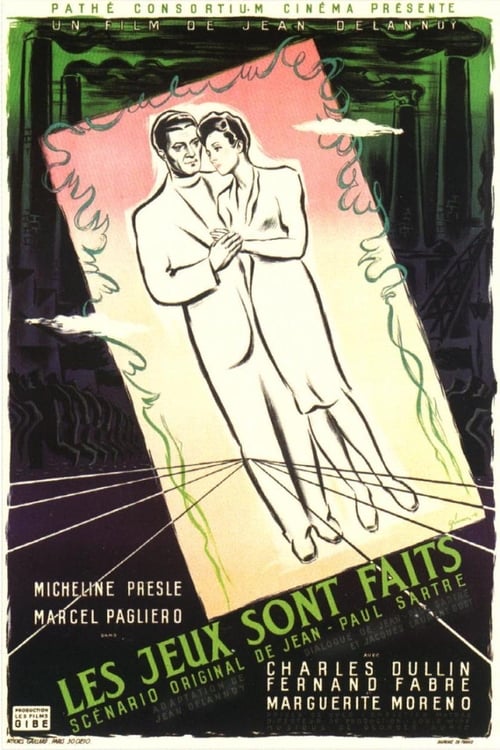
The Chips Are Down
1947
No user ratings available yet
Representation score: 4.0 out of 10
Representation Score
Fair
1950
Director
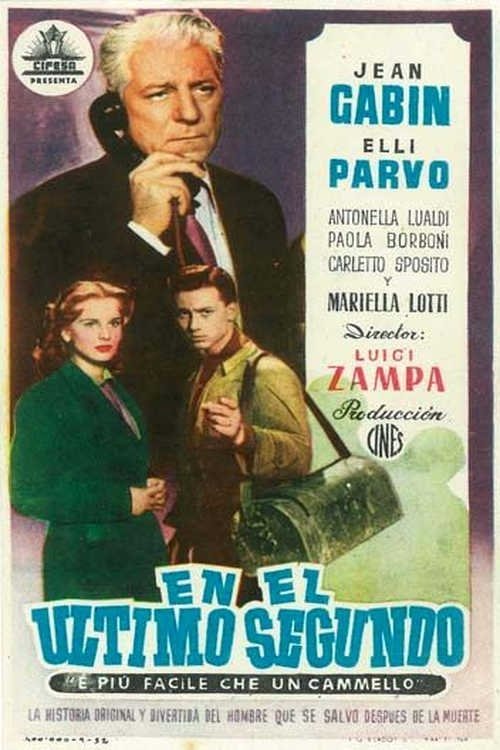
Luigi Zampa
Runtime
81 minutes
Average Rating
No ratings yetNew Showbiz Analysis
Twelve Hours to Live is a moral fable that prioritizes situational ethics over modern characters who reflect more than one aspect of diversity. It offers a nuanced look at human fallibility and accountability through the lens of a wealthy industrialist seeking redemption. The film's strength lies in its narrative structure, which allows the protagonist to challenge systemic judgments in the afterlife. This provides a sophisticated discussion on morality that goes beyond simple religious doctrine. However, the work remains limited by the social frameworks of its era. It lacks diversity in gender, race, and LGBTQ+ identities, reflecting the demographic homogeneity of 1950s Italian cinema.
Category Breakdown
The film centers on heterosexual relationships and the consequences of an extramarital affair, staying within the traditional social norms of the 1950s. It does not explore LGBTQ+ identities or experiences.
Narrative focus is on the male protagonist, Carlo Bacchi, who drives the story. Women play key roles in the conflict, but the structural power remains with the male lead.
The production reflects the demographic uniformity of mid-century Italy, focusing on a white, Italian social class without showing diverse racial backgrounds.
The film uses a fantasy setting to explore moral relativism and subjective judgment. It critiques capitalist-driven social disruptions through the perspective of a wealthy industrialist seeking redemption.
Mental health issues are touched upon through a suicide attempt, serving mainly as a catalyst for the protagonist's journey rather than giving a detailed look at neurodivergent experiences.
Present on Screen
Limited or Absent
Official Synopsis
After dying in a car accident, wealthy shoe industrialist Carlo Bacchi finds himself in the afterlife, where he is condemned to hell for having committed evil while alive. Defending himself against the accusation in an impassioned plea, however, he succeeds in obtaining to return to earth for a few hours to make reparation for the evil he committed and, above all, for the bad deed that caused Amedeo Santini's suicide attempt. The affair will lead him to make a risky but happy choice.
1947
1921

1955
1960

1999
1943
1994
1941
No reviews yet. Be the first to share your thoughts on this movie!
Use the rating form above to leave a star rating and optional review.