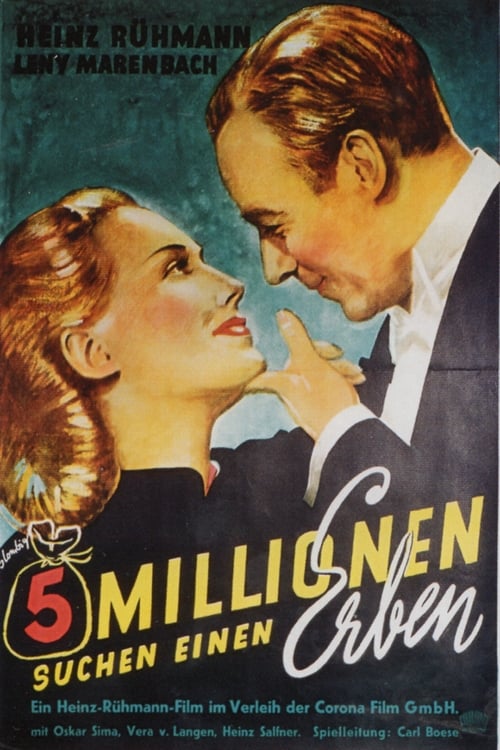
Five Millions Seek an Heir
1938
No user ratings available yet
Representation score: 1.4 out of 10

Representation Score
Minimal
1928
PassedDirector
Roy Del Ruth
Runtime
60 minutes
Average Rating
No ratings yetNew Showbiz Analysis
Five and Ten Cent Annie is a period comedy that aligns closely with the social and narrative conventions of the late 1920s. The plot revolves around a local conflict involving inheritance and romantic stability, without attempting to challenge the status quo. The film does not intentionally disrupt conventional expectations. Instead, it relies on traditional comedic formulas and a homogeneous demographic, reflecting the typical studio productions of its era. Ultimately, the film functions as a character-driven comedy that reinforces, rather than challenges, the dominant cultural and gender norms of the time.
Category Breakdown
The story centers around a traditional romantic relationship between Elmer and Annie. There are no characters with non-straight identities or same-sex relationships, which upholds the assumption that everyone is straight or cisgender.
Elmer is the main character dealing with a windfall and legal issues. Although Annie demonstrates strong determination, the power dynamics in their relationship follow a typical romantic comedy structure.
The cast and setting suggest a homogeneous demographic typical of 1928 Hollywood. No non-white or non-Anglo-Saxon characters are identified in the narrative.
The film follows traditional Western values, focusing on inheritance and romantic relationships. It uses standard clichés of sudden wealth without questioning the social institutions involved.
The available information provides no details regarding characters with visible or invisible disabilities.
Present on Screen
Limited or Absent
Official Synopsis
Street cleaner Elmer Peck (Clyde Cook) inherits a million dollars from his uncle Adam Peck (Tom Ricketts) on the conditions that he retains the uncle's valet, Briggs (William Demarest). until such time as Elmer marries, and that he appears at the office of the probate judge (Douglas Gerrard), at 5 P.M. on an appointed day. Complications arise as a result of the valet's determination to ruin the arrangement, and the equal determination by Elmer and his sweetheart Annie (Louise Fazenda) to see that he doesn't.
1938

1934
1937

1925

1930

1926
1914

1925
No reviews yet. Be the first to share your thoughts on this movie!
Use the rating form above to leave a star rating and optional review.