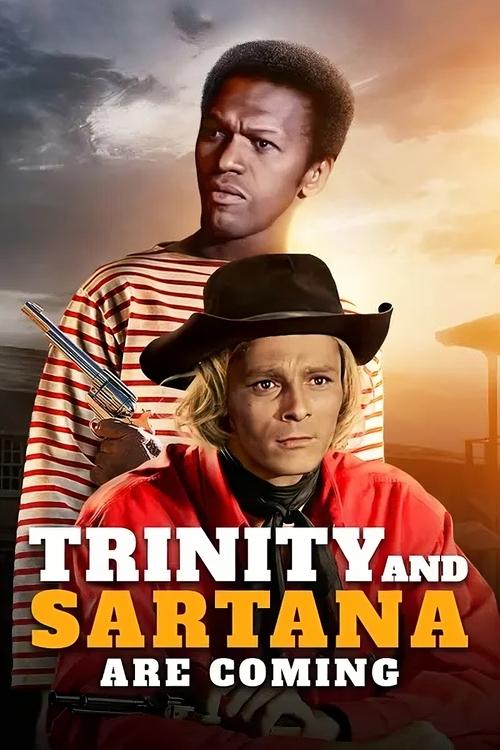
Trinity and Sartana Are Coming
1972
No user ratings available yet
Representation score: 2.4 out of 10
Representation Score
Minimal
1972
Director
Diego Spataro, Joe D'Amato
Runtime
87 minutes
Average Rating
No ratings yetNew Showbiz Analysis
The film opens on the sun-drenched, fictional town of Eldorado, a pastoral backdrop that masks the chaotic intrusion of two bumbling conmen, Carter and Jonathan Duke. This 1972 comedic spaghetti western, riding the coattails of the Trinity craze, sells a vision of the West where order is not maintained by law or community, but by the superior, unapologetic violence of its male protagonists. The camera loves the rugged, handsome faces of the leads, treating their incompetence as charming and their eventual dominance as the natural resolution to the town’s problems. The sold meaning is clear: male power is the only currency that matters. The "decent" townspeople are portrayed as weak or easily manipulated, while the protagonists’ brute force is the only thing that restores stability. This argument is reinforced by the treatment of women, particularly Juanita, who exists solely as a prize to be won, her value determined by her beauty rather than her agency. The film’s internal logic suggests that chaos is only resolved by a stronger, more chaotic force, a moral arithmetic that rewards violence and dismisses subtlety. The ending settles this verdict, with the protagonists’ dominance affirmed as the ultimate solution. There is no critique of the power dynamics on display; instead, the film celebrates them, framing the frontier as a space where the strong eat the weak and the camera looks on with approval. For a viewer seeking a nuanced exploration of the Western genre, the film offers little more than a reaffirmation of traditional hierarchies, where competence is synonymous with the ability to impose one’s will on the world.
Category Breakdown
No queer characters or non-heteronormative dynamics appear. Romantic interactions remain strictly heterosexual, with women serving as passive objects of male desire throughout the narrative.
Women function as peripheral prizes rather than active agents. Juanita exists primarily as a visual reward for the male leads, reinforcing traditional patriarchal hierarchies without offering female competence.
The cast is entirely Italian, creating a universal setting that avoids specific historical racial contexts. The protagonists’ outsider status is behavioral, leaving the film’s engagement with colonialism or ethnicity entirely absent.
The frontier is treated as a space where brute force restores order, validating violent masculinity as the natural state of civilization. Institutional authority remains weak or comic, offering no critique of underlying power structures.
No characters display physical, cognitive, or sensory impairments. The bodies on screen are idealized and functional, with no narrative weight given to disability or medical conditions.
Present on Screen
Limited or Absent
Official Synopsis
This comical spaghetti western inspired by the success of Lo Chiamavano Trinita and its sequels benefits from expansive cinematography by future cult filmmaker Aristide Massaccesi (a.k.a. Joe D'Amato). Stan Cooper and Gordon Mitchell star as a pair of bumbling conmen who wander through the West looking to make a fast buck. Their plans go awry when they run into a blustering, foul-tempered Mexican general who wants them eliminated.
1972
1981
1960
1965
1965
1968

1973
1960
No reviews yet. Be the first to share your thoughts on this movie!
Use the rating form above to leave a star rating and optional review.