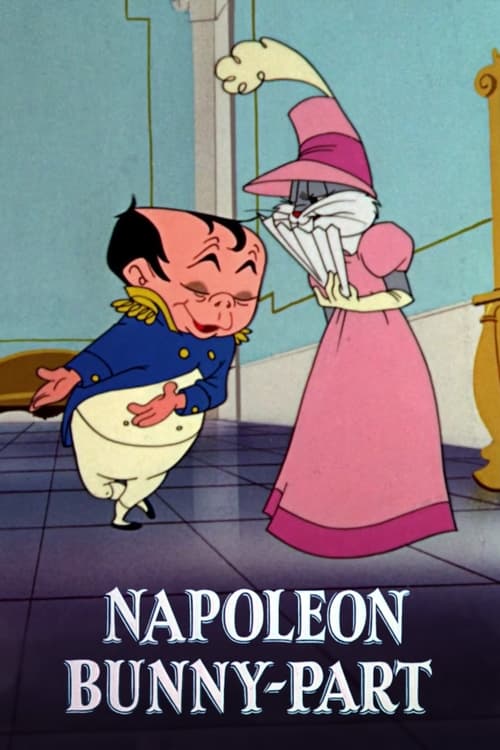
Napoleon Bunny-Part
1956
No user ratings available yet
Representation score: 0.4 out of 10
Representation Score
Limited
1945
Director
Friz Freleng
Runtime
7 minutes
Average Rating
No ratings yetNew Showbiz Analysis
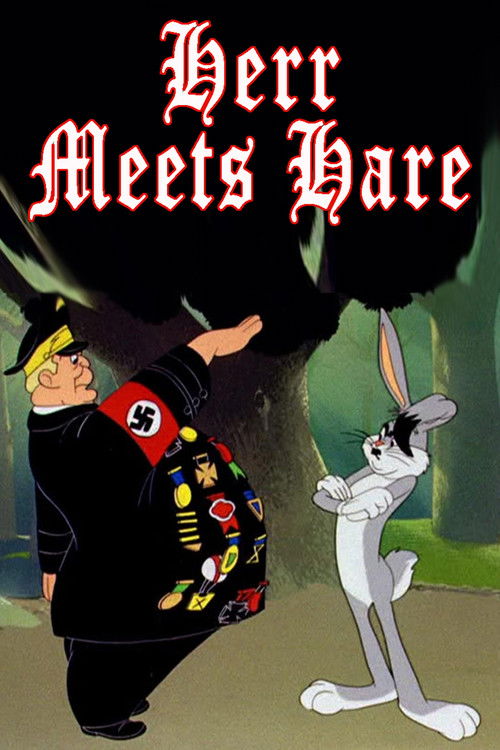
Herr Meets Hare is a wartime animation that uses slapstick and satire to challenge the legitimacy of Axis leadership. It functions as propaganda, relying on caricatures of political figures to drive its conflict. While the film lacks modern diversity, it demonstrates the protagonist's use of deception and chaos to undermine an oppressive regime. The work is a product of its 1945 context, using period-specific clichés and identity-shifting to address geopolitical tensions of the time.
Category Breakdown
The film does not include any visible LGBTQ+ characters or explore non-straight identities. The story focuses solely on the conflict between the protagonist and the antagonist.
Gender is used as a means of tactical deception rather than for character development. Bugs Bunny's transformation into Brunhilde serves as a functional disguise to disrupt the antagonist's expectations.
The film uses ethnic and national caricatures to support wartime propaganda. Identity-shifting destabilizes the antagonist, but the reliance on period-specific archetypes reflects era-specific social biases.
The narrative criticizes Western political institutions by ridiculing the Nazi regime. The protagonist's trickery acts as a liberating force against an oppressive political structure.
There are no depictions of physical or neurodivergent disabilities. No characters are shown with visible or invisible disabilities.
Present on Screen
Limited or Absent
Official Synopsis
Bugs disguises himself as Hitler, Stalin and Brunhilde when he confronts Nazi Hermann Goering in the Black Forest.
1956
1948
1954
1944
1951
1943
1955
1952
No reviews yet. Be the first to share your thoughts on this movie!
Use the rating form above to leave a star rating and optional review.