
Swann in Love
1984
No user ratings available yet
Representation score: 3.5 out of 10
Representation Score
Limited
2009
Director
Hermine Huntgeburth
Runtime
118 minutes
Average Rating
No ratings yetNew Showbiz Analysis
This adaptation of Effi Briest serves as a critique of 19th-century Prussian society rather than a showcase of modern demographic variety. While it lacks LGBTQ+ or racial diversity, it succeeds in deconstructing the rigid social hierarchies of its time. The film's strength lies in its focus on the protagonist's internal emotional truth. It uses Effi's personal tragedy to challenge the perceived stability of traditional Western institutions and social decorum. Ultimately, the work is a period-specific examination of individual autonomy versus systemic oppression. It prioritizes a psychological study of female empowerment over a diverse cast.
Category Breakdown
The film adheres to the assumption that everyone is straight or cisgender, with no depictions of queer subtext or non-assuming gender matches what was assigned at birth identities in the main characters.
The narrative highlights the psychological toll of submissive femininity by framing Effi's struggle for a significant role against an emotionally distant masculine leadership.
Casting is uniform, reflecting the demographic realities of the Prussian elite. The film maintains a strictly Eurocentric perspective without using color-blind casting.
The film portrays Prussian social codes and marriage contracts as stifling and destructive forces. It critiques traditional Western institutions by illustrating the human cost of maintaining social appearances.
There are no significant depictions of visible or invisible disabilities within the central narrative.
Present on Screen
Limited or Absent
Official Synopsis
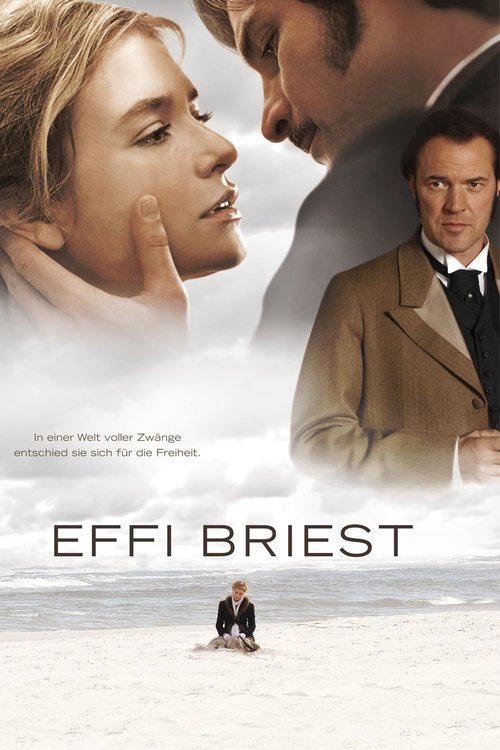
Following her parents' wishes, spirited seventeen-year-old Effi Briest marries Baron von Innstetten – a former admirer of her mother – who is twenty years Effi's senior. This marriage of prudence heralds the beginning of a humdrum life, far from home, for Effi. Innstetten devotes himself entirely to his political career, and the sleepy small town of Kessin has very little to offer in terms of variety. But then, one day, Innstetten's old regimental comrade, Major Crampas – a charming womanizer – arrives on the scene.
1984
1971
1999
1931
1933
1935
2001
1999
No reviews yet. Be the first to share your thoughts on this movie!
Use the rating form above to leave a star rating and optional review.