
Cronos
1993
No user ratings available yet
Representation score: 7.0 out of 10
Representation Score
Good
2009
RDirector
Park Chan-wook
Runtime
134 minutes
Average Rating
No ratings yetNew Showbiz Analysis
Park Chan-wook’s film succeeds by breaking down social and spiritual hierarchies rather than through demographic diversity. It excels in challenging traditional gender roles and religious authority, replacing rigid moralism with a complex, relativistic framework. However, the film remains culturally homogeneous and lacks explicit LGBTQ+ characters or narratives that question the assumption that everyone is straight or cisgender. The protagonist's condition is used primarily as a horror device rather than a nuanced exploration of disability or neurodivergence.
Category Breakdown
The film focuses on a heterosexual relationship but explores themes of identity fluidity and repressed desires. However, it does not include explicit LGBTQ+ characters or narratives that question the assumption that everyone is straight or cisgender.
Tae-ju defies traditional feminine passivity through her aggressive and assertive behavior. She drives the film's momentum as a self-actualized, destructive force.
The setting is a culturally homogeneous South Korean environment. It avoids blending different racial backgrounds to offer a deep, localized exploration of Korean social and religious structures.
The film deconstructs the concept of the sacred by showing a priest giving in to biological impulses. It critiques Western-influenced institutions like the Catholic Church through a lens of moral relativism.
The protagonist's vampirism serves as a horror device for philosophical inquiry. It focuses on existential crises rather than exploring disability or neurodivergence in depth.
Present on Screen
Limited or Absent
Official Synopsis
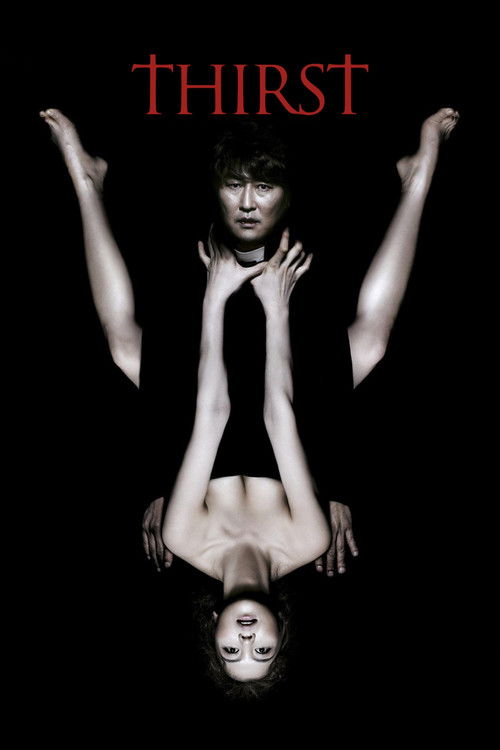
A respected priest volunteers for an experimental procedure that may lead to a cure for a deadly virus. He gets infected and dies, but a blood transfusion of unknown origin brings him back to life. Now, he’s torn between faith and bloodlust, and has a newfound desire for the wife of a childhood friend.
1993
1960
2001

1978

2011

1995

2012

1983
No reviews yet. Be the first to share your thoughts on this movie!
Use the rating form above to leave a star rating and optional review.