Oppenheimer: The Real Story
2023
No user ratings available yet
Representation score: 3.8 out of 10
Representation Score
Minimal
2016
TV-PGAverage Rating
No ratings yetNew Showbiz Analysis
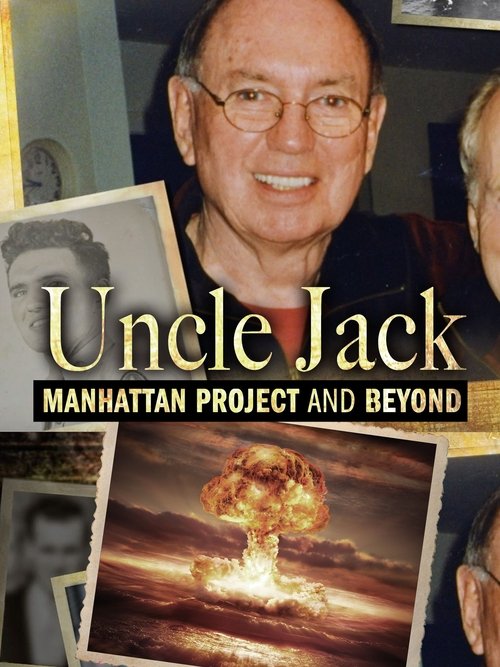
Uncle Jack: Manhattan Project and Beyond serves as a traditional biographical and historical record. It focuses on preserving academic and military history through the lens of John Edmund Gray's life and the broader scientific endeavor. The film reflects the social and institutional hierarchies of the mid-20th century. By emphasizing the established scientific community of the 1940s, the documentary maintains a conventional historical perspective without challenging existing clichés. Ultimately, the work functions as a tribute to a specific chapter of Western achievement. It does not employ progressive narrative structures to disrupt or critique the historical status quo.
Category Breakdown
The film does not include any LGBTQ+ characters or narratives related to non-straight or non-cisgender identities.
The documentary focuses on the male-dominated scientific and military hierarchies of the 1940s. It highlights the achievements of intellectuals within a traditionally male-centric environment.
The narrative centers on established American institutional structures and the recruitment efforts of the US government. It does not make a concerted effort to highlight perspectives from underrepresented racial groups.
The film celebrates Western scientific history as a historical preservation project. It adheres to traditional institutional narratives without deconstructing Western power structures.
The film does not provide any information about the portrayal of physical or neurodivergent disabilities. The interview-based format does not clarify if disability is addressed.
Present on Screen
Limited or Absent
Official Synopsis
The Manhattan Project was an enormous undertaking that required the efforts of many of the world's most brilliant intellectuals. Hundreds of physicists, mathematicians, and engineers were needed to design, build, and test the world's first atomic weapon and the Unites States government did everything in its power to lure these individuals to the Manhattan Project. Documentary to include: Interviews with Scientists conducted by the World War II Foundation Interviews with World War II Historians Interviews with WWII veterans Interviews with those who worked with John Gray in the world of Atomic Energy Interviews with authors who have written extensively about the Manhattan Project Interviews with people from the world of academia. This film is personal: One of those assigned to the project was my uncle John Edmund Gray, a University of Rhode Island graduate with a brilliant mind. —Tim Gray
2023
2013
2022

2018
2008
1998
2015
2023
No reviews yet. Be the first to share your thoughts on this movie!
Use the rating form above to leave a star rating and optional review.