Death Hunt
1977
No user ratings available yet
Representation score: 0.5 out of 10
Representation Score
Minimal
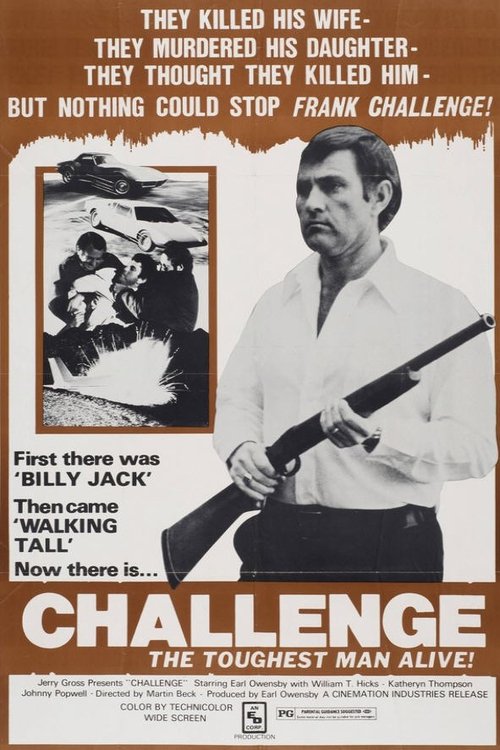
1974
PGDirector
Martin Beck
Runtime
94 minutes
Average Rating
No ratings yetNew Showbiz Analysis
Challenge is a typical 1970s crime drama that emphasizes a traditional male revenge storyline. The plot is driven by a male protagonist responding to political corruption and family loss, reinforcing traditional patriarchal structures. The film lacks depth in exploring multiple aspects of identity, focusing instead on individual justice rather than systemic issues. It adheres to the era's genre conventions, centering on a lone hero rather than a diverse cast. Overall, the work serves as a typical thriller of its time, avoiding challenges to social norms and lacking representation for underrepresented groups.
Category Breakdown
The film centers on a traditional male revenge storyline and does not explore non-straight identities or challenge assumptions about straight relationships.
The story revolves around a male protagonist who drives the plot through his actions. It emphasizes traditional masculine roles by portraying the hero as a decisive and lone vigilante.
The film follows the trend of having mostly white actors in political thrillers. There is no significant representation of non-Anglo-Saxon characters.
The movie offers a moderate critique of corruption within political systems. However, it relies on the lone hero cliché instead of deconstructing power structures.
There is no depiction of characters with physical or neurological differences in the narrative.
Present on Screen
Limited or Absent
Official Synopsis
U.S. Senate candidate Frank Challenge will not sell out to the Syndicate. As a result, his family is murdered. Then Challenge becomes judge, jury, and executioner.
1977
1983
1975
1972
1977
1977
1986

1953
No reviews yet. Be the first to share your thoughts on this movie!
Use the rating form above to leave a star rating and optional review.