
Beverly of Graustark
1926
No user ratings available yet
Representation score: 1.2 out of 10
Representation Score
Minimal
1934
ApprovedDirector
Marion Gering
Runtime
74 minutes
Average Rating
No ratings yetNew Showbiz Analysis
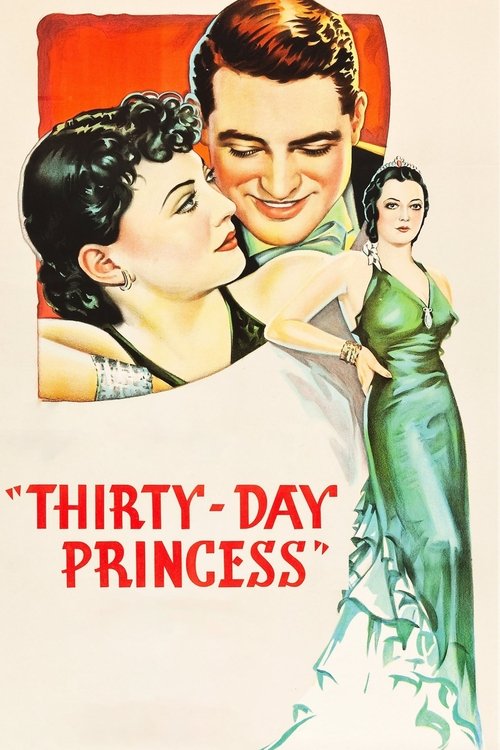
Thirty Day Princess is a standard 1930s studio romantic comedy that adheres to the era's conventional social and narrative structures. It lacks intentionality regarding diverse representation or subverting established social hierarchies. The film relies on traditional structures, such as the 'double' cliché and heterosexual romance, to drive its plot. While female characters are central to the deception, they operate within a framework of performative roles. Ultimately, the production reflects the racial and cultural homogeneity common in early sound-era Hollywood, focusing on comedic escapism rather than social critique.
Category Breakdown
The film follows a traditional romantic comedy structure. It does not depict same-sex intimacy or non-cisgender identities.
Female characters drive the central deception using a double cliché. However, the plot reinforces the idea that women are hired for decorative purposes in a male-dominated economy.
The story moves between Europe and New York City. It likely features a homogeneous Western cast typical of 1930s Hollywood, lacking diverse representation.
The plot explores the tension between European aristocracy and American capitalism. It focuses on comedic resolution without critiquing social structures.
A character contracts the mumps, which triggers the impersonation plot. There is no exploration of illness or neurodivergence.
Present on Screen
Limited or Absent
Official Synopsis
A European princess arrives in New York City to secure a much-needed loan for her country. She contracts the mumps, and an actress who looks exactly like her is hired to impersonate her.
1926

1926
1932
1937
1926

1933
1939
1943
No reviews yet. Be the first to share your thoughts on this movie!
Use the rating form above to leave a star rating and optional review.