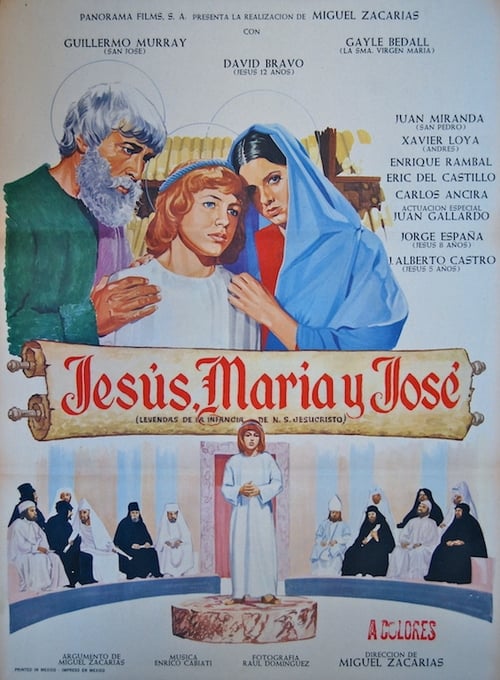
Jesús, María y José
1972
No user ratings available yet
Representation score: 1.1 out of 10
Representation Score
Minimal
1971
Director
Miguel Zacarías
Average Rating
No ratings yetNew Showbiz Analysis
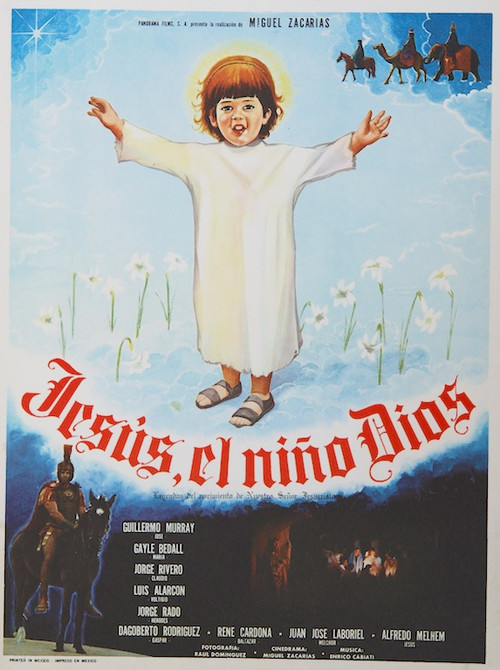
Jesús, el niño Dios is a traditional religious drama that prioritizes spiritual orthodoxy over narrative subversion. It adheres to the established hagiographic structures of 1970s cinema, focusing on the childhood of a foundational religious figure. The film reinforces conventional social and religious hierarchies. It lacks representation of diverse identities, instead emphasizing moral absolutes and traditional familial archetypes common to the era's religious biographies. Ultimately, the production upholds historical and spiritual traditions rather than challenging them through diverse perspectives or storytelling that reflects multiple aspects of identity.
Category Breakdown
The film follows traditional structures that assume everyone is straight and cisgender. It does not include any non-binary gender identities or same-sex relationships within its religious context.
Female characters are portrayed in traditional roles of maternal devotion and submissive piety. The narrative emphasizes traditional gender hierarchies without giving women intellectual or physical dominance.
As a Mexican production set in the Middle East, it may feature non-Anglo-Saxon casting. However, it likely relies on localized casting that does not capture specific Levantine ethnic nuances.
The story centers on a single religious tradition, reinforcing Christian morality and institutional values. It does not explore secularism or question religious authority.
There is no confirmed information regarding the portrayal of neurodivergence or physical disabilities. Such themes are typically used as metaphors for suffering in this genre.
Present on Screen
Limited or Absent
1972
1971
2019
1949
1976
No reviews yet. Be the first to share your thoughts on this movie!
Use the rating form above to leave a star rating and optional review.