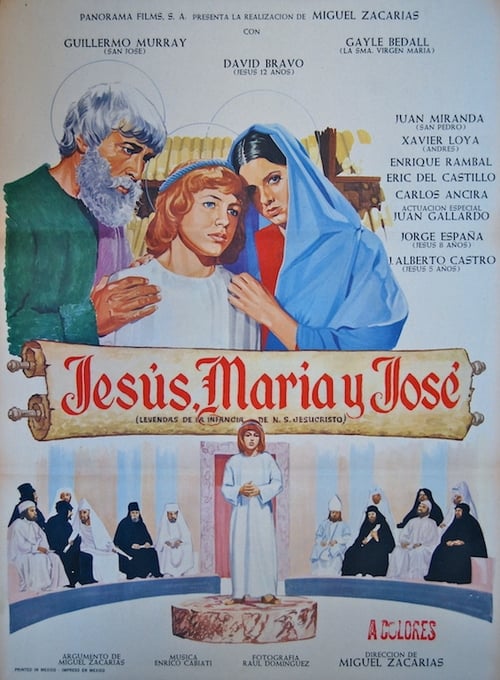
Jesús, María y José
1972
No user ratings available yet
Representation score: 1.1 out of 10

Representation Score
Limited
1971
Director
Miguel Zacarías
Runtime
115 minutes
Average Rating
No ratings yetNew Showbiz Analysis
Jesús, nuestro Señor is a traditionalist production that upholds established moral and hierarchical frameworks. The film centers on a singular theological perspective and reinforces conservative values. While the cast includes a primarily Hispanic and Latino ensemble, the narrative remains deeply rooted in a patriarchal structure and offers limited representation of independent female characters or diverse social identities. The film presents a world defined by absolute authority and morality, leaving little room for the complexities of modern social issues or underrepresented identities. The film's narrative is focused on reinforcing traditional religious values and upholding a singular moral perspective, which limits its exploration of contemporary social dynamics and diverse identities.
Category Breakdown
The film follows traditional religious interpretations and does not depict any non-assuming gender matches what was assigned at birth identities or same-sex relationships. It adheres to a strictly heterosexual framework.
Gender roles follow established biblical archetypes, with female characters often serving as supporters to the central male figure. Leadership and theological discourse remain centered on a patriarchal structure of male disciples.
The film features a predominantly Hispanic and Latino cast, providing a visually diverse representation for the Middle Eastern setting. However, it lacks a blend of modern cultural perspectives.
The narrative emphasizes a singular Christian moral framework and the authority of religious figures. It presents a world defined by divine law and traditional spiritual hierarchies.
Characters with disabilities are portrayed primarily as recipients of divine miracles, rather than as individuals with their own experiences and ability to act.
Present on Screen
Limited or Absent
Official Synopsis
Third movie in "Life of Christ" trilogy.
1972

1979
1971
2003
1966
1903
1952

1946
No reviews yet. Be the first to share your thoughts on this movie!
Use the rating form above to leave a star rating and optional review.