
Jagged Edge
1985
No user ratings available yet
Representation score: 2.2 out of 10
Representation Score
Minimal
1987
RDirector
Roger Donaldson
Runtime
114 minutes
Average Rating
No ratings yetNew Showbiz Analysis
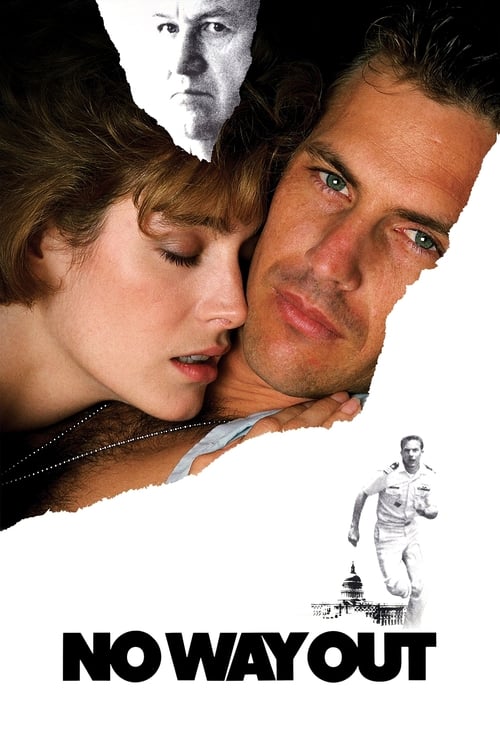
No Way Out is a traditional production regarding its demographic makeup and gendered power structures. The cast and setting reflect the socioeconomic and racial homogeneity of 1980s high-level political circles. However, the film avoids being a simple status quo piece through its thematic skepticism. By presenting truth as a malleable tool for those in power, it provides a nuanced critique of systemic corruption. Ultimately, while the film lacks diversity in its character identities, it succeeds in deconstructing the authority of the institutions it depicts.
Category Breakdown
The film adheres to a strictly heterosexual and cisgender framework. The central conflict involves a romantic relationship between two men and one woman, with no characters representing non-binary or LGBTQ+ identities.
Power dynamics are dominated by male-led military and political structures. Female characters primarily serve as catalysts for the plot, reacting to the actions of male protagonists rather than driving the story themselves.
The setting reflects a racially homogeneous environment typical of high-ranking Western political institutions. The narrative is viewed through a predominantly white, Anglo-Saxon lens with minimal characters who reflect more than one aspect of diversity.
The film critiques Western institutions by depicting government corridors as sites of corruption. It challenges the sanctity of official narratives and institutional infallibility.
There are no prominent depictions of physical or neurodivergent disabilities. Such characteristics do not play a central role in the development of the plot or character traits.
Present on Screen
Limited or Absent
Official Synopsis
Navy Lt. Tom Farrell meets a young woman, Susan Atwell, and they share a passionate fling. Farrell then finds out that his superior, Defense Secretary David Brice, is also romantically involved with Atwell. When the young woman turns up dead, Farrell is put in charge of the murder investigation. He begins to uncover shocking clues about the case, but when details of his encounter with Susan surface, he becomes a suspect as well.
1985
1991
1990
1948
1999

1987

1995
1983
No reviews yet. Be the first to share your thoughts on this movie!
Use the rating form above to leave a star rating and optional review.