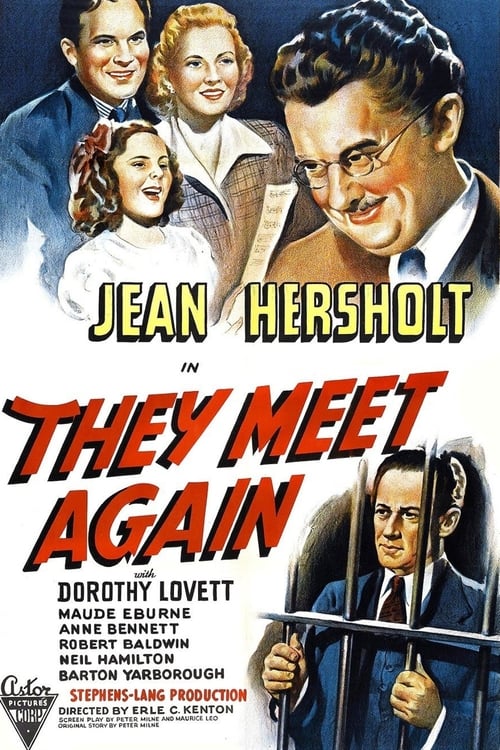
They Meet Again
1941
No user ratings available yet
Diversity score: 1.6 out of 10

1931
PassedDirector
Erle C. Kenton
Runtime
82 minutes
Average Rating
No ratings yetSynopsis
During the war two friends love the same nurse. After the war one becomes a detective, the other a racketeer.
Overall Score
Limited
Category Breakdown
LGBTQ+ Representation
The film focuses on a heteronormative romantic conflict between two men and a nurse. There are no visible non-cisnormative identities or narratives present.
Gender Representation
The story centers on male friendship and rivalry. The female nurse acts as an emotional catalyst, but lacks evidence of independent agency or subversion.
Racial & Ethnic Diversity
The film likely reflects the homogeneous casting common in 1931. The narrative follows standard Western-centric frameworks typical of early Hollywood war dramas.
Religious & Cultural Diversity
The plot explores individual morality through the lens of law and criminality. It lacks any indication of systemic or anti-capitalist critiques.
Disability Representation
There is no information available regarding the portrayal of characters with physical or neurodivergent disabilities.
Strengths
Areas for Improvement
AI Analysis
The Last Parade is a conventional wartime drama that prioritizes traditional character archetypes over social critique. The narrative follows a classic trope where two friends diverge into opposing moral paths—one becoming a detective and the other a racketeer. This structure emphasizes individual morality and romantic rivalry rather than systemic or intersectional exploration. The film functions as a standard product of the early 1930s studio system, adhering to the social hierarchies and narrative conventions of its era.
No reviews yet. Be the first to share your thoughts on this movie!
Use the rating form above to leave a star rating and optional review.