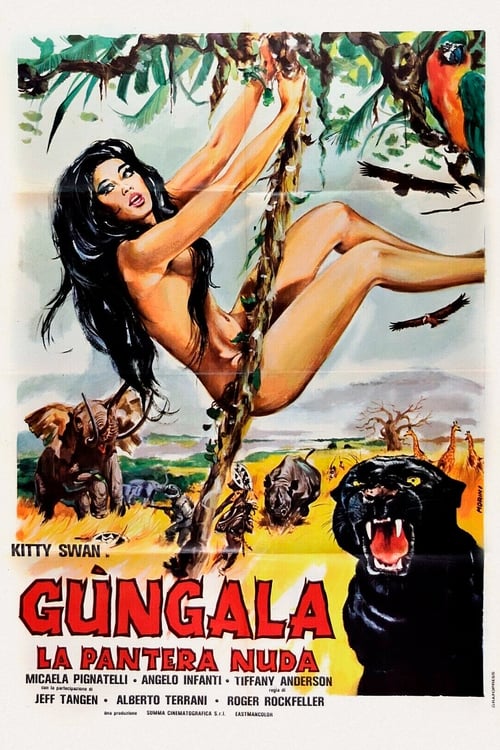
Gungala, The Black Panther Girl
1968
No user ratings available yet
Representation score: 1.3 out of 10

Representation Score
Limited
1969
RDirector
Guido Malatesta
Runtime
87 minutes
Average Rating
No ratings yetNew Showbiz Analysis
Tarzana: The Wild Woman is a product of its era, functioning as a traditional adventure piece that prioritizes genre clichés over sociopolitical depth. While it offers visibility through a female lead, the character's role is complicated by the 'wild woman' archetype and colonialist framing. The film fails to provide meaningful characters who reflect more than one aspect of diversity, instead relying on the 'white savior' or 'outsider' narrative within a Kenyan tribal context. This reinforces a distinction between the Western protagonist and the indigenous population rather than subverting existing power hierarchies. Ultimately, the film lacks progressive representation, focusing on Western familial recovery and conventional adventure aesthetics rather than cultural critique or diverse identity exploration.
Category Breakdown
The film does not include any queer narratives or non-cisgender identities. It follows the assumption that everyone is straight or cisgender, typical of 1960s jungle adventure films.
While the film features a female protagonist in a position of leadership, she is depicted through the 'wild woman' stereotype. This often balances visibility with the objectification of the female form.
The story centers a white protagonist within a Kenyan setting, using a colonialist framework. It relies on the 'exceptional outsider' cliché rather than presenting a non-white majority.
The African setting serves primarily as a backdrop for Western character development. The narrative emphasizes familial lineage rather than exploring or critiquing local cultural institutions.
There are no visible or invisible disabilities portrayed in the film. No characters are identified as having physical or neurodivergent impairments.
Present on Screen
Limited or Absent
Official Synopsis
The daughter of Sir Donovan is believed dead with her mother and other relatives in a plane crash in the African jungle. Fifteen years later, vague reports arrive in Europe that a Kenyan tribe has elected a white woman as their queen, Tarzana (meaning 'strange woman' in Bantu), and Sir Donovan wants to believe she is his daughter.
1968
1939
1956

1949
1979
1950
1976
1936
No reviews yet. Be the first to share your thoughts on this movie!
Use the rating form above to leave a star rating and optional review.