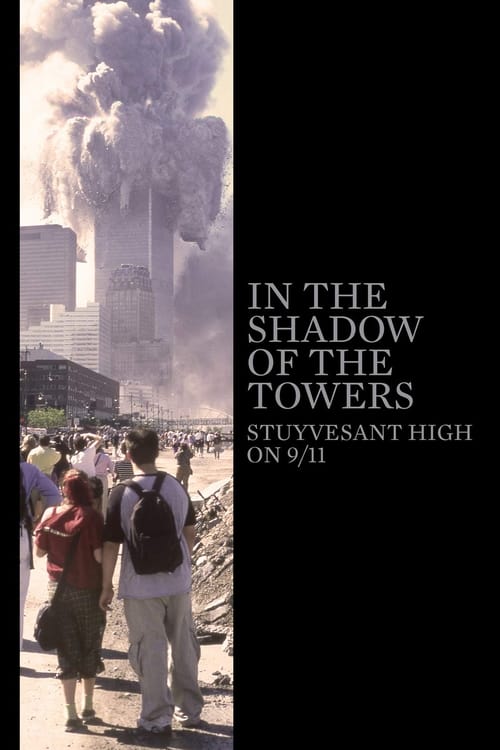
In the Shadow of the Towers: Stuyvesant High on 9/11
2019
No user ratings available yet
Diversity score: 5.7 out of 10

2019
NRDirector
Amy Schatz
Runtime
30 minutes
Average Rating
No ratings yetSynopsis
An introduction to the terrorist attacks in the United States on September 11, 2001 presented for a young audience.
Overall Score
Fair
Category Breakdown
LGBTQ+ Representation
The film acts as a historical archive of personal testimony rather than a study of identity politics. It does not explicitly center LGBTQ+ narratives, but the absence of derogatory depictions maintains a neutral stance.
Gender Representation
A balanced distribution of voices features both men and women as primary narrators. The film avoids traditional gender hierarchies by focusing on individual agency and survival rather than social roles.
Racial & Ethnic Diversity
The documentary excels by reflecting the multicultural demographic of New York City. By including Black, Hispanic, Asian, and White interviewees, the narrative disrupts a homogeneous historical account.
Religious & Cultural Diversity
The film operates within a framework of historical realism. It avoids monolithic morality by presenting a plurality of subjective truths, focusing on individual memory rather than religious dogma.
Disability Representation
Testimonies include the perspectives of those navigating physical and psychological trauma. While it treats survivors with dignity, intentional representation of neurodivergence or visible disability is not a central pillar.
Strengths
Areas for Improvement
AI Analysis
Amy Schatz delivers a documentary that functions as a mosaic of identities, effectively mirroring the social fabric of New York City. The film's greatest strength is its refusal to rely on a singular demographic lens, providing a nuanced historical record through a wide spectrum of voices. While the film succeeds in racial and ethnic inclusion, it remains somewhat neutral regarding specific identity politics. It does not actively seek to subvert traditional tropes or center specific marginalized groups like the LGBTQ+ community, resulting in a standard, egalitarian approach to representation. Ultimately, the work serves as a significant example of inclusive historical documentation. It prioritizes human-centric storytelling and personal testimony to ensure the tragedy is viewed through a diverse, multicultural lens.
2019

2016

2021

2017

2008

2014

2011
2013

2022

2022

2020
2016
No reviews yet. Be the first to share your thoughts on this movie!
Use the rating form above to leave a star rating and optional review.