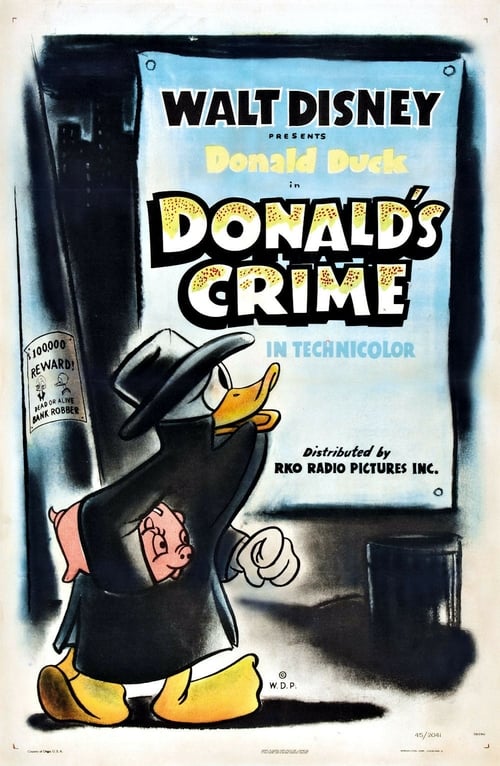
Donald's Crime
1945
No user ratings available yet
Representation score: 1.8 out of 10
Representation Score
Minimal
1948
NRDirector
Jack King
Runtime
7 minutes
Average Rating
No ratings yetNew Showbiz Analysis
This 1948 animated short reinforces the social norms of its time. The narrative centers on a character-driven comedic conflict without exploring diverse identities or multi-layered themes. The film relies on traditional hierarchies, especially regarding gender and institutional authority. By focusing on a legal dispute within a Western context, it upholds established social orders without challenging them. Overall, the film lacks representation across various categories, using anthropomorphic characters to maintain a homogeneous and conventional worldview.
Category Breakdown
The film does not depict any non-binary or LGBTQ+ identities or intimate relationships between characters of the same gender. The interactions are centered around the protagonist and institutional figures.
The courtroom scene features only male lawyers, a judge, and the protagonist, reinforcing a traditional patriarchal structure without challenging gender roles.
The anthropomorphic characters represent a homogeneous group without specific human ethnicities. The setting reflects a Western-centric environment without any meaningful racial or ethnic diversity.
The narrative emphasizes the legal system as a stabilizing force, focusing on resolving commercial disputes through established social hierarchies. This reinforces Western institutional values.
There are no depictions of physical, sensory, or neurodivergent disabilities. The protagonist's emotional volatility is treated humorously rather than as a serious issue related to mental health.
Present on Screen
Limited or Absent
Official Synopsis
Donald is caught in the rain while eating his lunch. He ducks into a restaurant for a cup of coffee, but Chez Pierre is a very ritzy place, and by the time all is said and done, he's facing a bill for $35.99, and he only got a drop of coffee, and he only has a nickel. Pierre takes him to court, where this story is told, and is ordered to pay $10 or wash dishes for ten days.
1945

1948
1939
1939
1948
1940
1943
1954
No reviews yet. Be the first to share your thoughts on this movie!
Use the rating form above to leave a star rating and optional review.