Pension Boulanka
1964
No user ratings available yet
Representation score: 2.6 out of 10
Representation Score
Good
1947
Director
Leopold Lindtberg
Runtime
96 minutes
Average Rating
No ratings yetNew Showbiz Analysis
Madness Rules stands out as a mid-century character study that prioritizes psychological depth over simplistic moral binaries. It excels in its treatment of mental health, refusing to use neurodivergence as a mere plot device for villainy. While the film provides a more sophisticated view of justice and morality compared to many of its contemporaries, it remains tied to the era's demographic limitations. Gender and racial dynamics adhere to traditional mid-century hierarchies and homogeneity. Ultimately, the film's strength lies in its refusal to rely on easy archetypes, offering a more humanistic look at the intersection of mental illness and criminality.
Category Breakdown
The film does not include any explicitly LGBTQ+ characters or situations involving non-straight relationships. The main romance involves a male patient and a female nurse.
Nurse Irma Wasem demonstrates strong women's ability to drive the story within a professional asylum environment. However, the central investigative authority is held by the male protagonist, Constable Studer.
The film reflects the homogeneous demographics typical of 1947 Swiss cinema. There is no indication of a diverse cast or deviation from standard postwar European racial norms.
The story challenges the tendency to pathologize mental illness by using a manic-depressive patient as a red herring. This approach suggests a sophisticated critique of systemic assumptions regarding guilt.
The film explores neurodivergence through a nuanced portrayal of Herbert Caplaun, avoiding common clichés of stigmatization.
Present on Screen
Limited or Absent
Official Synopsis
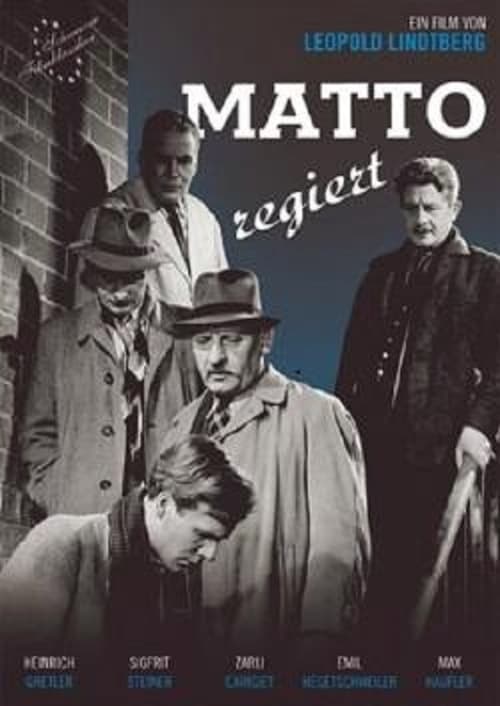
If any one man is responsible for the rejuvenation of the postwar Swiss film industry, that man was director Leopold Lindtberg. Matto Regiert (Madness Rules) was co-adapted for the screen by Lindtberg from a novel by Friedrich Glauser. Heinrich Gretler stars as Police Constable Studer, the hero of several of Glauser's most popular works. This time, Studer must solve the murder of the director of an insane asylum -- and it's not (surprise, surprise) the most likely suspect, manic-depressive patient Herbert Caplaun. For box-office purposes, Matto Regiert stresses a romantic subplot involving Caplaun and nurse Irma Wasem.
1964

1939
1944

1950

1957

1946
1946
1958
No reviews yet. Be the first to share your thoughts on this movie!
Use the rating form above to leave a star rating and optional review.