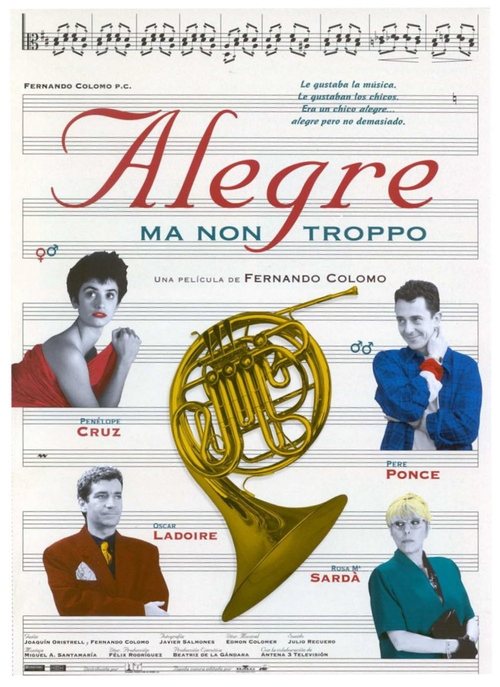
Alegre ma non troppo
1994
No user ratings available yet
Diversity score: 6.2 out of 10

1978
Director
Antônio Calmon
Runtime
102 minutes
Average Rating
No ratings yetSynopsis
Toquinho is a young man living in Marechal Hermes, a poor neighborhood in Rio de Janeiro, together with his widow mother and a younger sister. Although he is poor, he is also ambitious, and wants to change his life. He spends all his time on the beach, at Arpoador, Ipanema, where he dreams to become a famous surfer. Besides, he usually finds Patricia there, a rich and liberated young woman, whom he likes a lot. To impress Patricia and satisfy some of her wishes, he lets himself be seduced by André, a gay guy who, in return for his sexual favors, promises him a trip to Hawaii for a surf championship.
Overall Score
Fair
Category Breakdown
LGBTQ+ Representation
The film integrates a same-sex dynamic into the central plot through André. This transactional relationship introduces complex layers of sexual agency and social negotiation that challenge standard romantic tropes of the era.
Gender Representation
Patricia is depicted as a liberated young woman who acts as a catalyst for the protagonist's ambitions. However, the narrative remains anchored in traditional romantic pursuits, limiting the subversion of gender hierarchies.
Racial & Ethnic Diversity
The setting highlights class distinctions between impoverished Marechal Hermes and wealthy Ipanema. This geography facilitates a study of the intersection between race, class, and social mobility within the Brazilian landscape.
Religious & Cultural Diversity
The story explores the tension between traditional family structures and individualistic ambitions. It examines the moral complexities of social climbing and the pursuit of personal desire over communal stability.
Disability Representation
There is no evidence of characters with visible or invisible disabilities within the narrative.
Strengths
Areas for Improvement
AI Analysis
Nos Embalos de Ipanema serves as a transitional narrative that challenges the rigid social and moral frameworks of the late 1970s. It moves beyond simple melodrama by incorporating non-traditional interpersonal dynamics and exploring the friction between socio-economic classes. The film's strength lies in its willingness to use a gay character to facilitate the protagonist's journey, adding a layer of social negotiation rarely seen in contemporary works. While it does not fully dismantle traditional hierarchies, it prioritizes individual agency and the complexities of ambition. Ultimately, the film provides a nuanced look at how desire and class mobility intersect, making it a work of significant social interest for its period.
1994

1997

1979

1984

1998

2007

1982
1983

2019

1992

1962

1976
No reviews yet. Be the first to share your thoughts on this movie!
Use the rating form above to leave a star rating and optional review.