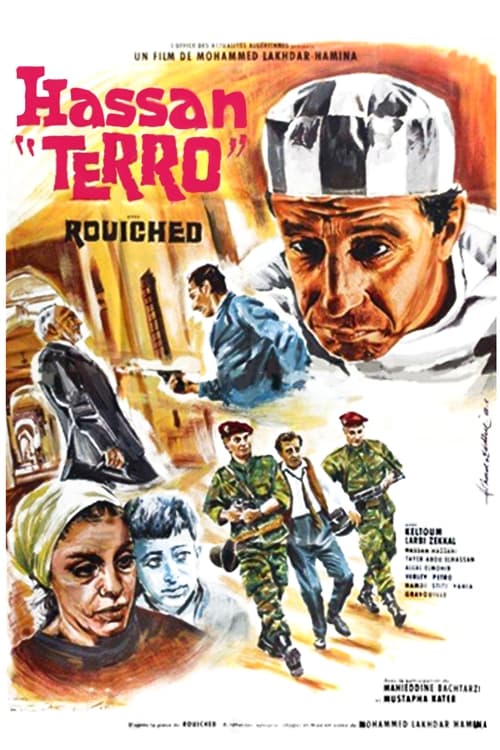
Hassan Terro
1967
No user ratings available yet
Representation score: 3.9 out of 10
Representation Score
Excellent
1971
Director
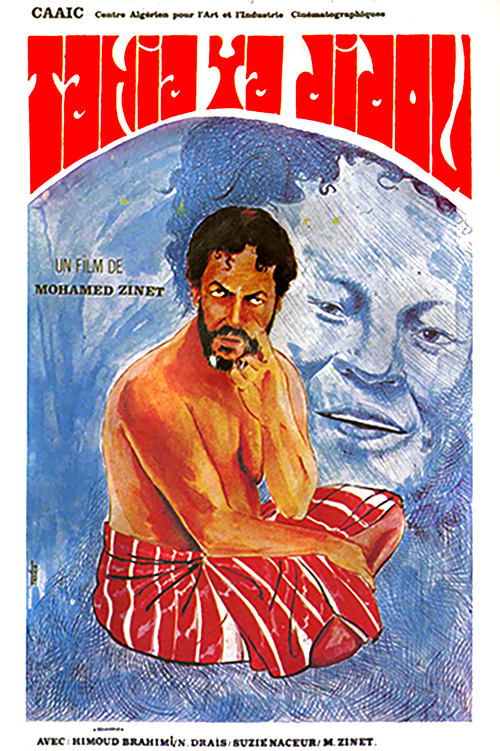
Mohamed Zinet
Runtime
77 minutes
Average Rating
No ratings yetNew Showbiz Analysis
Tahia Ya Didou! is a sophisticated post-colonial film that uses the travelogue genre to deconstruct the colonial gaze. It shifts the focus from visiting tourists to the ability to act and dignity of the Algerian people. The film's strength lies in its ability to use Western characters as foils to highlight local cultural depth. By centering Algerian citizens and using poetic elements like Momo's verses, it reclaims the narrative of Algiers. While it lacks LGBTQ+ representation, the film achieves high marks for racial and cultural ability to act. It transforms a tourism-commissioned project into a powerful critique of imperialist psychological remnants.
Category Breakdown
The film does not include explicit LGBTQ+ identities or non-straight relationships. Instead, it focuses on the tension between French tourists and Algerian locals, avoiding queer subtext.
The French wife is portrayed to criticize colonial attitudes through her reliance on clichéd stereotypes. This challenges the idea of the enlightened European traveler, though the characters remain somewhat archetypal.
The film highlights Algerian citizens as autonomous protagonists. It challenges colonial prejudices by showing the French man's racist mindset as a flaw to be questioned.
The work emphasizes Algerian cultural expression and critiques Western military history through poetic verse and documentary realism.
A blind man serves as a pivotal character in the narrative, highlighting a profound confrontation with historical trauma and the consequences of colonial conflict.
Present on Screen
Limited or Absent
Official Synopsis
Originally commissioned by the city of Algiers to promote tourism, Mohamed Zinet’s Tahia ya Didou blends documentary with fiction to create a poetic, acerbic and rapturous portrait of the director’s native city. The camera travels freely, through the port, market, streets and cafés, capturing everyday people, some of whom recur frequently enough to seem like protagonists. The nominal plotline follows a French tourist couple’s leisurely visit to the city, the man having previously served in the army during the Algerian war. As they walk around, his comments betray his mindset’s racist colonial prejudices, while his wife reiterates asinine clichés. Their unhurried wandering is interrupted when he comes across a blind man and realises that he tortured him during his army service. The film is punctuated with punchy sequences that show a poet named Momo delivering verse as an elegy for Algiers.
1967

2016

1996
1967
1970
1994

1975
2012
No reviews yet. Be the first to share your thoughts on this movie!
Use the rating form above to leave a star rating and optional review.