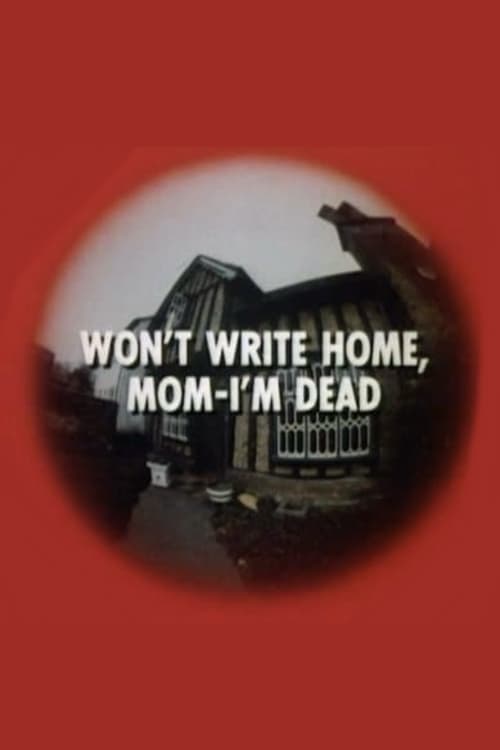
Won't Write Home, Mom–I'm Dead
1975
No user ratings available yet
Diversity score: 1.5 out of 10

1974
TV-14Director
John Sichel
Runtime
64 minutes
Average Rating
No ratings yetSynopsis
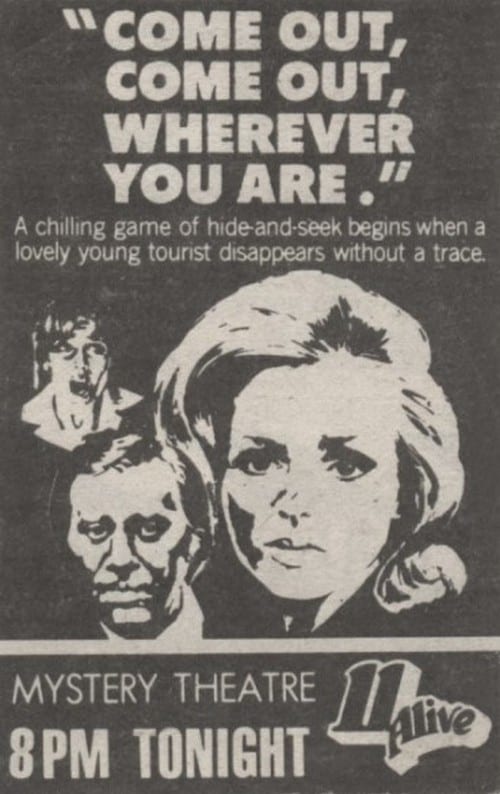
When his brother vanishes without a trace, American Robert Stone goes to his last known location: a remote English village. Robert's investigation leads him to the mansion of Jonathon Lanceford, a man obsessed with the Gothic works of Edgar Allen Poe, and his beautiful and enigmatic niece Dominie...
Overall Score
Limited
Category Breakdown
LGBTQ+ Representation
The film lacks discernible LGBTQ+ characters or narratives. Central tensions are driven by traditional romantic and sexual obsessions without engaging non-heteronormative identities.
Gender Representation
Dominie moves away from purely submissive archetypes, occupying a space of psychological agency and danger. However, the narrative remains largely tethered to the male protagonist's investigative journey.
Racial & Ethnic Diversity
The production features a homogeneous cast typical of 1970s British-set dramas. There is no evidence of intentional racial blending or the subversion of Anglo-Saxon casting norms.
Religious & Cultural Diversity
The film explores the collapse of traditional institutions and the breakdown of social order. It emphasizes moral relativism and the deconstruction of established societal structures.
Disability Representation
There is no evidence of characters with disabilities being portrayed with agency. Psychological instability serves the horror genre rather than providing a nuanced exploration of mental health.
Strengths
Areas for Improvement
AI Analysis
Kiss Me and Die is a mid-1970s Gothic horror that prioritizes atmospheric nihilism over demographic inclusion. It functions as a study of social decay and the breakdown of authority rather than a vehicle for identity representation. The film's strength lies in its thematic deconstruction of social stability. By presenting a world of moral ambiguity, it avoids the restorative resolutions common in television of its era. However, the production remains rooted in a traditional cinematic framework. It lacks intersectional casting and fails to provide diverse, identity-driven narratives, resulting in a narrow social scope.
No reviews yet. Be the first to share your thoughts on this movie!
Use the rating form above to leave a star rating and optional review.