Find another title
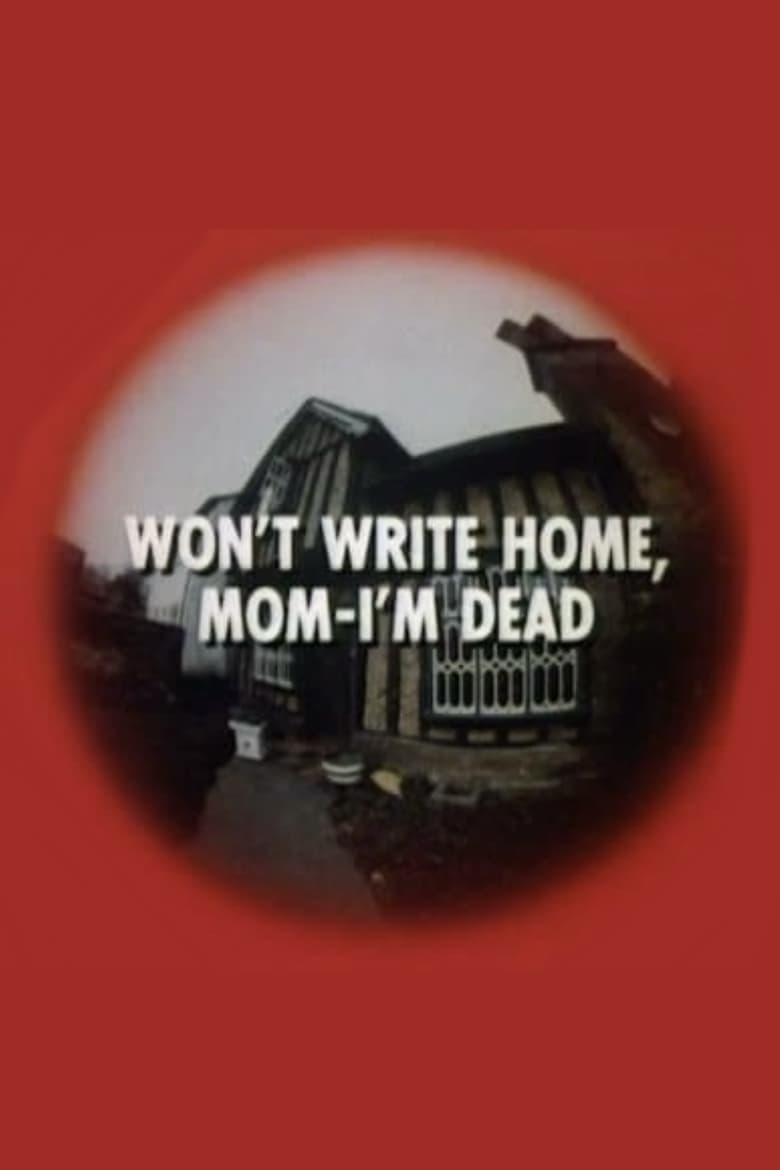
Won't Write Home, Mom–I'm Dead
1975
TV-14Director
James Ormerod
Runtime
73 minutes
Average Rating
No ratings yetSynopsis
A woman hears her fiancee's ghostly voice telling her to find him.
Where to Watch
Diversity & Representation
Overall Score
Minimal
Category Breakdown
LGBTQ+ Representation
The story centers on a heterosexual romantic connection between a woman and her fiancé. There are no visible non-cisnormative identities or narratives that challenge heteronormativity.
Gender Representation
A female protagonist drives the plot, yet she is motivated by the voice of a deceased male figure. This structure relies on traditional male-driven catalysts rather than female agency.
Racial & Ethnic Diversity
The film lacks any indication of a multi-ethnic cast or race-bent casting. It appears to follow the conventional, non-diverse casting standards typical of 1975 television.
Religious & Cultural Diversity
The narrative focuses on a singular romantic tragedy within standard genre tropes. It lacks explicit themes regarding secularism, anti-Western perspectives, or diverse cultural identities.
Disability Representation
The protagonist experiences auditory phenomena that could relate to neurodivergence. However, it is unclear if this is handled with agency or used strictly as a supernatural plot device.
Strengths
- The film provides a central female protagonist to anchor the supernatural mystery.
Areas for Improvement
- The plot relies on a male figure to drive the female lead's actions.
- There is a complete absence of racial, ethnic, or LGBTQ+ representation.
- The portrayal of auditory phenomena lacks clear agency or neurodivergent depth.
AI Analysis
This 1975 television movie follows a conventional horror-drama trajectory centered on romantic loss and supernatural mystery. The narrative structure is largely traditional, relying on a female lead who is prompted to act by a male figure's voice. The film lacks evidence of diverse casting or intersectional storytelling. It adheres to the mid-century social hierarchies and storytelling norms prevalent in television during its era. Without specific details on character agency or thematic subversion, the work remains a standard genre piece that does not disrupt traditional social or identity-based hierarchies.
Rate this Movie
Reviews
No reviews yet. Be the first to share your thoughts on this movie!
Use the rating form above to leave a star rating and optional review.