
The Elephant Walk
1979
No user ratings available yet
Representation score: 5.3 out of 10
Representation Score
Excellent
1992
Not RatedDirector
Jean-Claude Lauzon
Runtime
107 minutes
Average Rating
No ratings yetNew Showbiz Analysis
Léolo is a postmodern exploration of identity that thrives on breaking down repressive social and religious frameworks. It excels by prioritizing the internal, psychological world of its protagonist over traditional, linear storytelling. The film's strength lies in its nuanced handling of sexual awakening and its critique of institutionalized morality. By framing fantasy as a survival mechanism, it provides a sophisticated look at neurodivergence and the psychological burden of rigid social structures. However, the film's intense focus on a specific Québécois socioeconomic context limits its multi-ethnic range. While culturally authentic, the narrow focus on a localized population results in lower scores for racial and ethnic diversity.
Category Breakdown
The film explores repressed homoerotic feelings and non-traditional sexual awakening through a fragmented, fantasy-driven perspective. It avoids assumptions that everyone is straight or cisgender, focusing instead on the psychological impact of developing a sexual identity in a restrictive environment.
The film presents a sophisticated critique of male-dominated hierarchies, showing the home as a place of tension rather than stability. It highlights how strict ideas of masculinity and traditional family roles lead to personal isolation.
The story is deeply rooted in a specific Québécois socioeconomic context. Although it doesn't have a multi-ethnic cast, it offers a detailed and authentic portrayal of a localized, lower-class cultural identity.
The narrative criticizes religious austerity and traditional Western institutions as oppressive forces. It portrays the protagonist's escape as a necessary response to corrupt authority and rigid social orders.
The film offers a profound exploration of neurodivergence and psychological distress. The protagonist's dependence on intense fantasy is portrayed as a sophisticated way of dealing with mental health issues without resorting to patronizing stereotypes.
Present on Screen
Limited or Absent
Official Synopsis
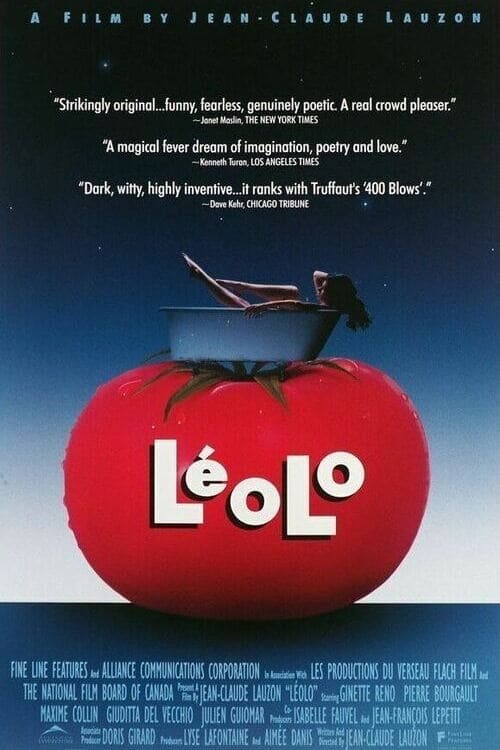
The story of an imaginative boy who pretends he is the child of a sperm-laden Sicilian tomato upon which his mother accidentally fell.
1979

1974

2011

1998

1994

1989

1983

1994
No reviews yet. Be the first to share your thoughts on this movie!
Use the rating form above to leave a star rating and optional review.