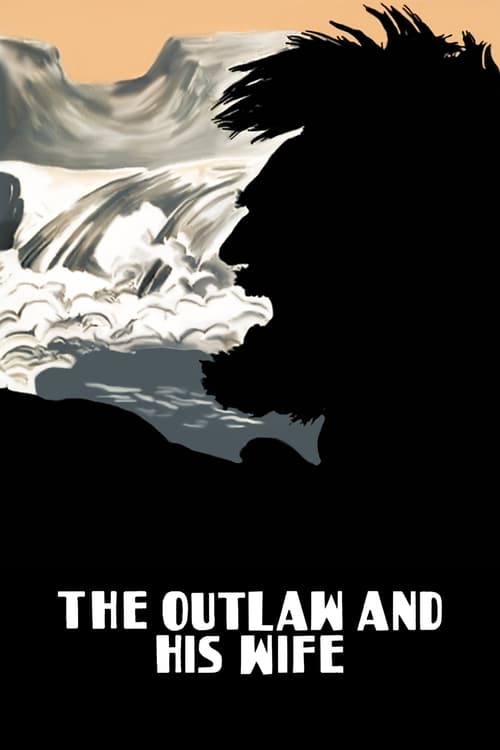
The Outlaw and His Wife
1918
No user ratings available yet
Representation score: 2.5 out of 10
Representation Score
Minimal
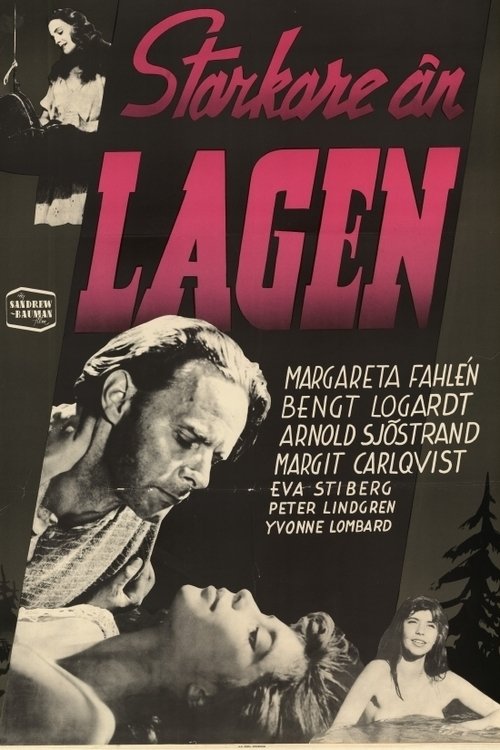
1951
16Director
Arnold Sjöstrand
Runtime
96 minutes
Average Rating
No ratings yetNew Showbiz Analysis
Starkare än lagen is a period drama that prioritizes historical realism and individual survival over social disruption. The narrative structure adheres to the social realism of mid-century Swedish filmmaking, focusing on a male protagonist's struggle against the law. The film lacks complexity in representing multiple aspects of identity, reflecting the demographic and social norms of its 1951 production era. It functions as a traditional exploration of justice and endurance rather than a challenge to established hierarchies. Ultimately, the work is a localized study of 1870s mountain settlers, offering little representation outside of the era's standard social structures.
Category Breakdown
The film does not include any characters with non-binary genders or same-sex relationships. The story focuses on a male protagonist within a traditional framework that assumes everyone is straight and cisgender.
The story centers around Helge, a male protagonist who navigates survival and conflict. It relies on traditional masculine clichés and lacks specific character arcs for female figures.
Set in 1870s Sweden, the film reflects the ethnically homogeneous population of the time. There is no indication of diverse or non-Anglo-Saxon characters.
The drama explores tensions between individual ability to act and institutional authority. However, it operates within the traditional morality and social frameworks common to 1950s cinema.
There is no mention of characters navigating physical, sensory, or neurodivergent disabilities within the narrative.
Present on Screen
Limited or Absent
Official Synopsis
About the farming mountain settlers in 1870s Sweden. The young Helge has been accused of manslaughter and has to fight for his life to survive.
1918
1987
1950
1982
1922
1950
1949
1962
No reviews yet. Be the first to share your thoughts on this movie!
Use the rating form above to leave a star rating and optional review.