Cassiopeia
1996
No user ratings available yet
Representation score: 4.5 out of 10
Representation Score
Limited
1965
Director
Yoshio Kuroda, Sanae Yamamoto
Runtime
80 minutes
Average Rating
No ratings yetNew Showbiz Analysis
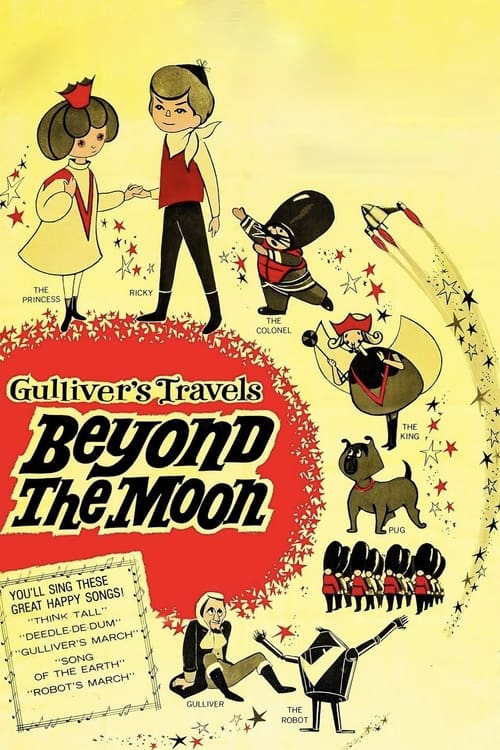
Gulliver's Travels Beyond the Moon is a mid-century science fiction adventure that relies on established genre clichés. The narrative follows a conventional hero's journey, emphasizing a male-led group restoring peace on a distant planet. Despite offering a non-Western perspective through its Japanese production, the film's character types remain traditional. The conflict is framed through a standard good-versus-evil binary, without addressing modern multi-layered themes. Overall, the film reflects the storytelling norms of 1965, prioritizing imaginative world-building and didactic adventure over challenging social or gender hierarchies.
Category Breakdown
The film does not include any characters with LGBTQ+ identities or non-cisgender roles. The story follows typical adventure themes from the time period.
The expedition team is mostly made up of men, including Ted, Professor Gulliver, Crow, and a toy soldier. The Queen of the Purple Planet is portrayed as a traditional female villain.
Produced in Japan, the film presents a non-Western viewpoint. However, there are no specific ethnic details for human characters, with non-human entities representing diversity.
The plot follows a classic hero's journey aimed at restoring order. It functions as a traditional morality tale focused on maintaining peace.
There is no information available about the portrayal of physical or neurodivergent disabilities in this work.
Present on Screen
Limited or Absent
Official Synopsis
The story concerns a homeless boy named Ted. After seeing a movie about Gulliver he meets Professor Gulliver himself in a forest. Gulliver is now an elderly, space-traveling scientist. With Dr. Gulliver's assistant Crow, and Ted's companions, a talking dog and a toy soldier, they travel the Milky Way to the Planet of Blue Hope, which has been taken over by the Queen of Purple Planet and her evil group of robots. Armed with water-pistols and water balloons, which melt the villains, Ricky and Gulliver restore Blue Hope to its doll-like owners.
1996

1982
1979

1939

1977
1981
1997
1965
No reviews yet. Be the first to share your thoughts on this movie!
Use the rating form above to leave a star rating and optional review.