
Pushover
1954
No user ratings available yet
Representation score: 1.7 out of 10
Representation Score
Minimal
1954
ApprovedDirector
Richard Quine
Runtime
83 minutes
Average Rating
No ratings yetNew Showbiz Analysis
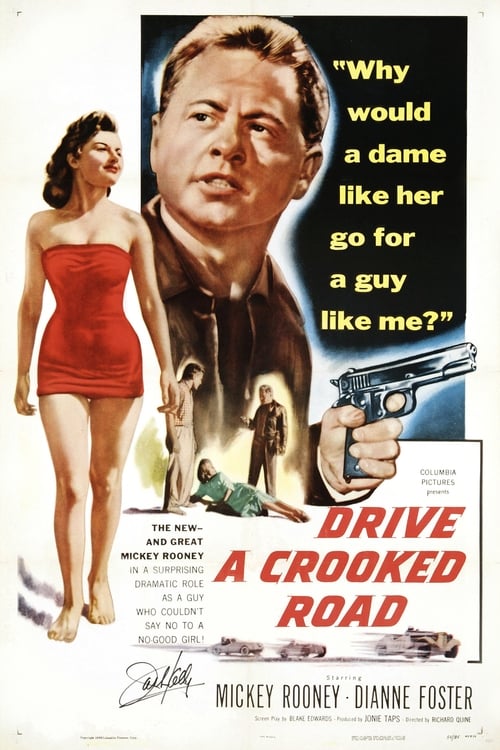
Drive a Crooked Road is a typical mid-century crime thriller that adheres strictly to the social and moral frameworks of 1950s Hollywood. The plot relies on traditional clichés, such as the 'wrong man' archetype, driven by romantic entanglements. The film reinforces conventional hierarchies rather than challenging them. It lacks representation of LGBTQ+ identities, diverse racial backgrounds, or characters with disabilities, functioning as a product of its era. Ultimately, the work serves as a conventional genre piece that prioritizes traditional gender roles and social order over storytelling that reflects multiple aspects of identity.
Category Breakdown
The story focuses on a heterosexual relationship between a mechanic and a gangster's girlfriend. It does not include any representation of LGBTQ+ identities or critiques of the assumption that everyone is straight or cisgender.
The female lead mainly serves as a catalyst for the male protagonist's criminal journey. Her role aligns with the traditional femme fatale stereotype, highlighting romantic influence over independent action.
The film reflects the predominantly white cast typical of 1950s Hollywood productions. There is no evidence of diverse casting or an inclusive ensemble.
The narrative upholds mid-century cinematic morality and emphasizes the importance of law and order. It adheres to prevailing social norms without offering any cultural critiques.
There is no indication of characters with visible or invisible disabilities. The film does not use disability as a nuanced character trait.
Present on Screen
Limited or Absent
Official Synopsis
A mechanic gets caught up with the mob when he falls for a gangster's girlfriend.
1954
1949
1950

1949

1955

1949
1952
1948
No reviews yet. Be the first to share your thoughts on this movie!
Use the rating form above to leave a star rating and optional review.