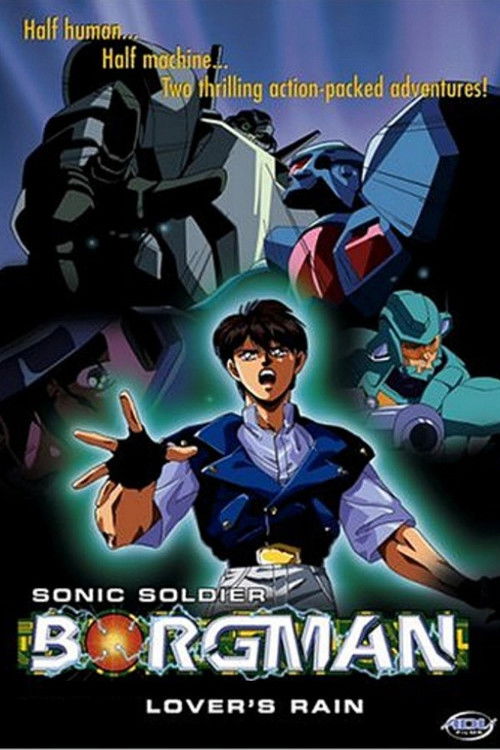
Sonic Soldier Borgman: Lover's Rain
1990
No user ratings available yet
Representation score: 4.6 out of 10

Representation Score
Fair
1989
Director
Hiroshi Negishi
Runtime
60 minutes
Average Rating
No ratings yetNew Showbiz Analysis
Sonic Soldier Borgman: Last Battle is a science fiction drama that emphasizes high-concept themes over social issues. It excels in providing female characters with significant professional ability to act and technical expertise within a cyberpunk backdrop. However, the film adheres to traditional narrative structures, lacking representation of LGBTQ+ identities or non-cisgender narratives. It also offers limited perspectives on diverse racial or ethnic backgrounds. Overall, the work explores the relationship between humans and machines, while challenging some gender hierarchies but maintaining a largely homogeneous and conventional social framework.
Category Breakdown
The film follows a traditional focus on heterosexual relationships, such as between Ryo and Anise, without addressing non-straight or non-cisgender identities.
Female characters play significant roles in driving the plot through their professional ability to act and technical skills. Anise, in particular, makes independent decisions and transitions into high-tech positions.
The cast is predominantly Japanese, reflecting the story's setting. While it avoids whitewashing, there is little evidence of diverse racial or ethnic backgrounds.
The narrative centers on the ethics of science and the human-machine interface, avoiding critiques of social or religious institutions.
There is no significant focus on visible or invisible disabilities. Characters are defined by their roles as elite technological operatives rather than through disability-driven arcs.
Present on Screen
Limited or Absent
Official Synopsis
It has been three years since the end of the series. Ryo works for NASA as an engineer on a large rocket project. Anise, fellow Borgman and lover, has been reduced to flipping burgers in a restaurant. So naturally, when she gets a letter offering her a professional job in a big, Japanese, high-tech project, she jumps at the chance. Ryo, however, is as indecisive as ever and so she leaves for Japan without him. Chuck Sweager, the third Borgman, is a police officer, as is his girlfriend Miki...
1990

1989

1994

1992

1989

1986
1966

1986
No reviews yet. Be the first to share your thoughts on this movie!
Use the rating form above to leave a star rating and optional review.