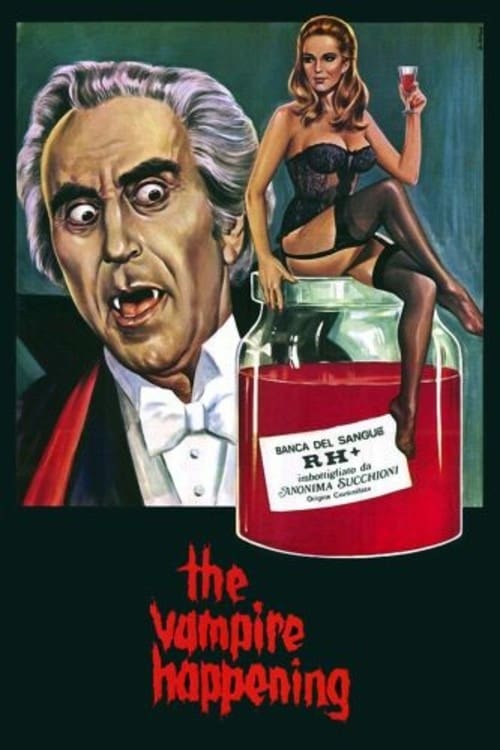
The Vampire Happening
1971
No user ratings available yet
Diversity score: 3.8 out of 10

1952
NRDirector
John Gilling
Runtime
74 minutes
Average Rating
No ratings yetSynopsis
The legendary Bela Lugosi as "the Vampire" teams up with Britain's much-loved "Mother Riley" in this hilarious comedy adventure. The Vampire plans to control the world with the help of his robot, which accidentally gets shipped to Mother Riley. Through radar control, he contacts the robot and orders it to come to him, bringing along Mother Riley! But his life is turned upside down when he holds this most meddling of mothers captive.
Overall Score
Limited
Category Breakdown
LGBTQ+ Representation
The film lacks any discernible LGBTQ+ characters or narratives. It operates within the standard social parameters of 1950s British cinema without exploring non-cisnormative identities.
Gender Representation
Mother Riley provides a notable disruption of traditional gender hierarchies. As a matriarchal figure with high agency, she subverts typical depictions of submissive femininity by disrupting the antagonist's plans.
Racial & Ethnic Diversity
The cast and setting are largely homogeneous, reflecting the demographic norms of 1952 Britain. There is no evidence of non-white or non-Anglo-Saxon representation in the production.
Religious & Cultural Diversity
The film offers a nuanced look at class-based social transgressions. Mother Riley’s disregard for authority and decorum is framed as a source of comedic empowerment rather than a moral failing.
Disability Representation
There is no significant or intentional representation of physical or neurodivergent disabilities. While slapstick comedy is present, no characters with disabilities possess meaningful agency.
Strengths
Areas for Improvement
AI Analysis
Mother Riley Meets the Vampire is a period-specific character study centered on working-class disruption. The film's primary strength lies in its subversion of gender tropes through the chaotic, dominant agency of its central female lead. However, the production is heavily limited by the era's lack of racial and LGBTQ+ inclusion. The narrative remains largely homogeneous, reflecting the demographic constraints of 1950s British genre cinema. While the film avoids systemic critiques of capitalism or religion, it finds success in framing social non-conformity as a comedic strength. It prioritizes individual eccentricity over the maintenance of rigid social order.
1971
1970
1989
1990
2022
1966

1985
1995

2014
1959
1973
2000
No reviews yet. Be the first to share your thoughts on this movie!
Use the rating form above to leave a star rating and optional review.