
Who's Afraid of Dracula?
1985
No user ratings available yet
Representation score: 3.3 out of 10
Representation Score
Fair
2000
Director
Marco Manetti, Antonio Manetti
Runtime
100 minutes
Average Rating
No ratings yetNew Showbiz Analysis
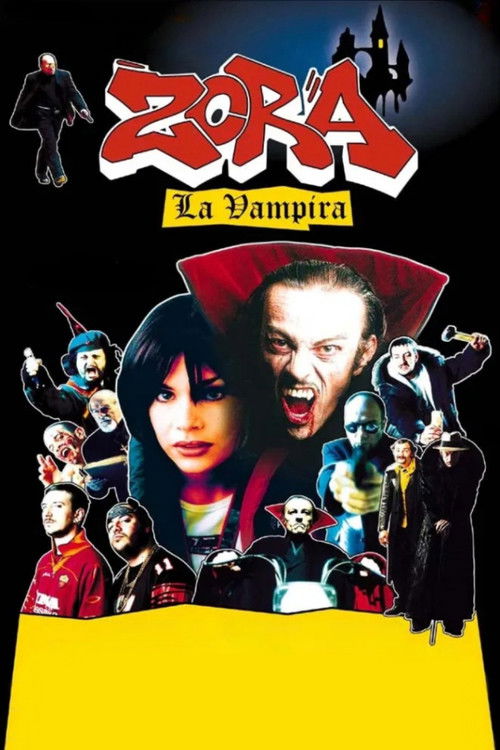
Zora la vampira is a postmodern genre exercise that prioritizes stylistic subversion over social advocacy. It repositions the female figure from a traditional victim to a source of modern ability to act through Zora's identity as an urban artist. While the film moves away from rigid, aristocratic horror hierarchies toward a more fluid, urban setting, it remains limited in its engagement with systemic identity politics. The narrative stays within conventional romantic archetypes and lacks explicit LGBTQ+ representation. Ultimately, the film functions as a cultural mashup. It trades Transylvanian clichés for Roman hip-hop subculture, offering a moderate departure from conservative narrative norms without reaching a high level of multi-layered depth.
Category Breakdown
The film centers on the romance between Dracula and Zora, but there are no explicit LGBTQ+ characters or narratives that question the assumption that everyone is straight or cisgender.
Zora disrupts traditional horror hierarchies by serving as a powerful protagonist rather than a passive victim. Her role as a graffiti artist challenges the patriarchal structures typical of gothic horror.
The shift to a Roman hip-hop setting introduces new cultural elements. However, the film lacks a majority non-white cast, offering only a moderate departure from Anglo-centric clichés.
The story contrasts ancient aristocratic traditions with modern, anti-establishment subcultures. Using street art as a lens, it subtly critiques traditional social orders and institutional stability.
There is no discernible evidence regarding the portrayal of physical or neurodivergent disabilities within the film.
Present on Screen
Limited or Absent
Official Synopsis
Count Dracula trades Transylvania for Italy in search of fresh blood and Western standards of living, but finds instead his ancient love Zora, reincarnated as a young graffiti artist from the Roman hip-hop scene.
1985
2023
2002

1994
1974
1995

1970
1995
No reviews yet. Be the first to share your thoughts on this movie!
Use the rating form above to leave a star rating and optional review.