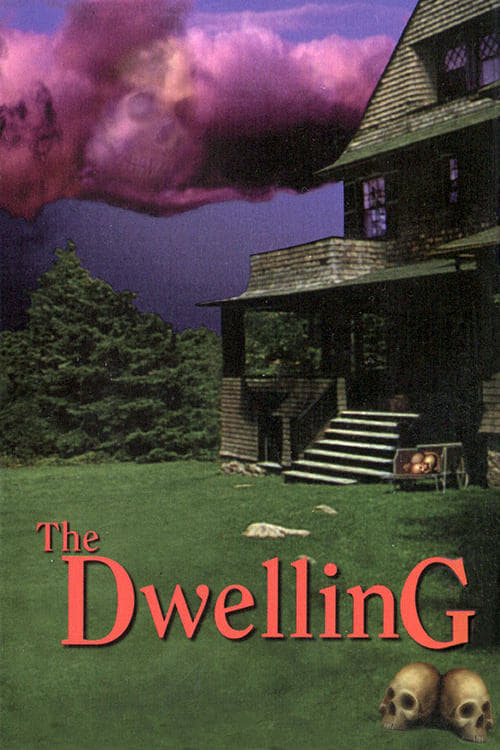
The Dwelling
1993
No user ratings available yet
Diversity score: 2.4 out of 10

1991
Director
Larry Fessenden
Runtime
93 minutes
Average Rating
No ratings yetSynopsis
Geoffrey (Stephen Ramsey) and Lillian (Miriam Healy-Louie) are a couple spending the summer in the country in hopes of smoothing over some rough patches in their relationship. However, Geoffrey, who is a research scientist, has brought his work with him, which hardly helps, since Lillian's biggest problem with him is that he doesn't spend any time with her, and he seems more concerned with his career than his marriage. This is all the more galling for Lillian because she has given up her career as an artist in order to be more supportive of Geoffrey's work. Geoffrey is also upset because he's only been able to use mice for his lab experiments with new medications, and he is eager to begin working with larger animals; in his impatience, he begins trapping dogs, and he eventually catches the pet of a little girl named Frances (Ashley Arcemont).
Overall Score
Limited
Category Breakdown
LGBTQ+ Representation
The film centers on a traditional romantic dyad between Geoffrey and Lillian. There is no evidence of non-cisnormative identities or narratives that critique heteronormativity.
Gender Representation
While Geoffrey's descent into madness subverts masculine competence, the narrative remains tethered to traditional domesticity. Lillian often serves as a psychological witness to male instability.
Racial & Ethnic Diversity
The focus on a couple moving to a rural location suggests a potentially homogeneous domesticity. There is no documented evidence of significant non-white representation.
Religious & Cultural Diversity
The story explores psychological decay rather than deconstructing social hierarchies. It lacks explicit critiques of Western institutions or the promotion of secularism.
Disability Representation
Mental health is depicted through the lens of impending madness. This risks using psychological instability as a mere plot device rather than a nuanced portrayal of neurodivergence.
Strengths
Areas for Improvement
AI Analysis
No Telling is a psychological horror study that prioritizes atmospheric tension over social commentary. While it disrupts the heroic archetype by showing a protagonist's mental collapse, it stays within the bounds of traditional genre tropes. The film lacks engagement with intersectional identity politics or diverse cultural frameworks. It functions primarily as an exploration of individual isolation and the fragility of the human psyche. Ultimately, the work remains aligned with the era's standard horror conventions, focusing on internal dread rather than the subversion of systemic social hierarchies.
1993
2020

2002

1976

2014

2004

2004
1988

2011

2012
1996

2010
No reviews yet. Be the first to share your thoughts on this movie!
Use the rating form above to leave a star rating and optional review.