Crowhaven Farm
1970
No user ratings available yet
Representation score: 2.0 out of 10
Representation Score
Limited
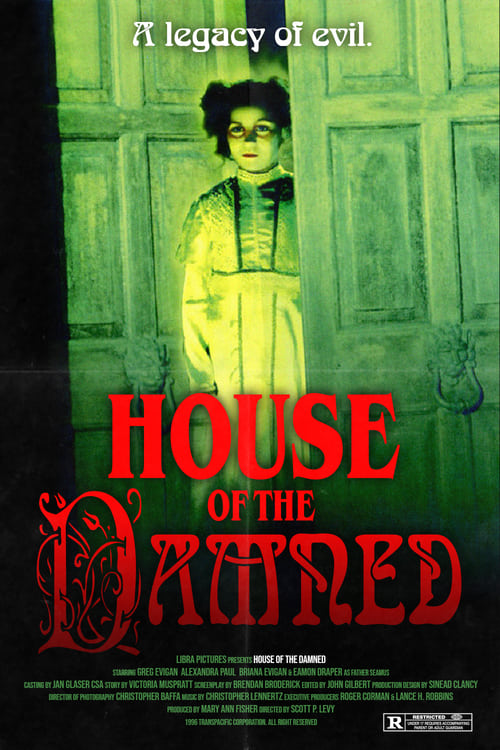
1996
RDirector
Scott P. Levy
Runtime
83 minutes
Average Rating
No ratings yetNew Showbiz Analysis
House of the Damned operates as a conventional Gothic horror film, prioritizing established genre clichés over social subversion. The story follows a nuclear family unit navigating domestic instability and ancestral trauma in a remote Irish estate. The film relies heavily on traditional archetypes, such as the religious authority figure and the emotionally vulnerable female protagonist. This structure reinforces mid-1990s genre expectations rather than exploring diverse identities. Ultimately, the film lacks significant diversity, focusing instead on a homogeneous Western family and standard supernatural conflicts.
Category Breakdown
The film focuses solely on heterosexual marriage and does not include any characters with non-cisgender identities or narratives that challenge traditional sexual orientations.
Maura serves as the central figure of the psychological conflict. Her struggle is framed through clichés of female emotional instability, despite possessing ancestral ability to act.
The story centers on a homogeneous Western family within an Irish setting. The narrative reinforces a Eurocentric focus without broader ethnic variety.
The plot utilizes traditional religious frameworks, featuring a local priest as a moral arbiter. It relies on classical Gothic clichés regarding black magic and ancestral curses.
The narrative contains no mention of characters navigating physical, neurodivergent, or mental health disabilities.
Present on Screen
Limited or Absent
Official Synopsis
Will and Maura, despite their marital problems, decide to come to Ireland and live on Maura's ancestral estate, bringing with them their daughter Aubrey. But soon weird happenings around the house lead a local priest to confess that Maura's ancestors practiced black magic, and Maura's own insecurities threaten to bring her into the evil fold.
1970

1960
1970
2002
1989
1979
1998
2016
No reviews yet. Be the first to share your thoughts on this movie!
Use the rating form above to leave a star rating and optional review.