Running with the Devil
1973
No user ratings available yet
Representation score: 3.4 out of 10
Representation Score
Limited
1973
RDirector
Edward J. Lakso, Herbert L. Strock
Runtime
90 minutes
Average Rating
No ratings yetNew Showbiz Analysis
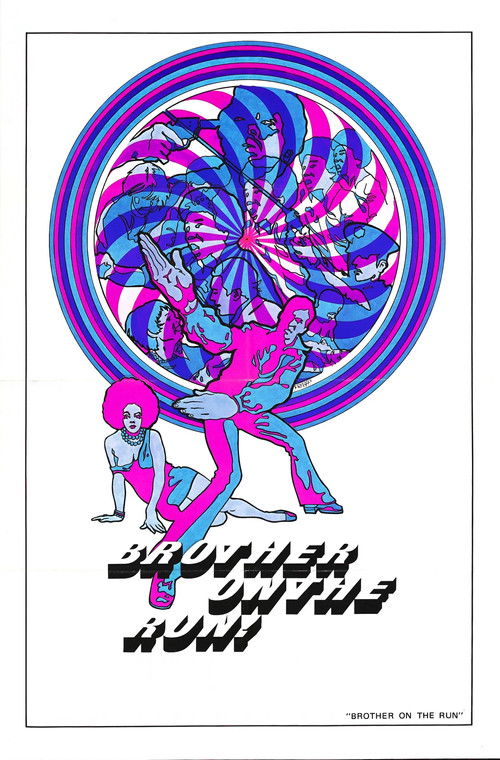
Brother on the Run opens with the stark, high-contrast faces of uniformed authority, a visual cue that immediately frames the state as cold and institutional. This 1973 exploitation drama, directed by Edward J. Lakso and Herbert L. Strock, uses this aesthetic to sell a specific moral argument: the Black nuclear family is the true site of moral authority, superior to the rigid machinery of the law. The film’s protagonist, Professor Grant 'Boots' Turner, is not a criminal in the eyes of the narrative but a protector, his "run" a justified flight from a system that fails to recognize human nuance. The sold meaning is clear: institutional power is hollow without familial grounding. The camera lingers on the domestic sphere, treating the home as a sanctuary against the state’s overreach. Turner’s competence is measured by his ability to shield his family, while the military officers are depicted as emotionally stunted bureaucrats. This framing inverts the typical 1970s white-centric narrative, placing a Black man at the center of moral legitimacy and portraying the state as the antagonist. However, the film’s internal logic remains traditional; the conflict is resolved not by dismantling the institution but by affirming the family’s right to exist outside its purview. The ending settles this tension with a quiet domestic resolution. The "run" concludes not with a political victory but with a return to the home, where the family unit is reasserted as the final moral verdict. The institution is left behind, not defeated, but rendered irrelevant by the warmth of familial loyalty. This is a conservative progressive text: it challenges state authority through the lens of traditional family values, offering a vision of Black respectability that is both a critique of systemic rigidity and an affirmation of domestic stability. The film’s low-budget aesthetic enhances this realism, making the moral stakes feel immediate and personal rather than abstract.
Category Breakdown
The narrative operates within a strictly heteronormative framework where marriage and procreation are the sole markers of adult legitimacy. No same-sex intimacy, queer identity, or non-binary presence is depicted or implied.
Professor Turner functions as the active moral agent, navigating institutional threats to protect the domestic sphere. Maud Cooper serves as the static emotional anchor, her value derived from maternal presence rather than independent competence. The film rewards traditional gender roles: men act, women sustain.
Terry Carter, a Black actor, headlines the film as the competent protagonist, inverting the era’s typical white savior dynamic. The narrative centers a Black family’s integrity against state overreach, treating their domestic life as the moral standard. However, the supporting cast remains largely white, and the conflict is framed as a moral dispute rather than a systemic racial critique.
The film positions the nuclear family as the primary site of moral authority, directly challenging the legitimacy of military and legal institutions. State power is depicted as rigid and emotionally stunted, while familial loyalty is framed as the higher law. The ending affirms domestic stability over institutional glory, treating the state as an obstacle to personal virtue.
No characters with physical, cognitive, or sensory impairments are depicted. The narrative does not engage with disability as a social, medical, or personal experience.
Present on Screen
Limited or Absent
Official Synopsis
A black exploitation flick of the early 70's about a college/high school teacher who tries to intervene and rescue his student who is being pursued by the law. The professor happens to have sexual intercourse with at least 2 different women on his way to save his student. I've gotta love the title music track fr this movie, very 70's... "Brother on the run...etcetcetc. If you see t in the $3.00 video bin at your local video outlet pick it up for your own little amusement. It's not a must see, it's more like a "gotta see it to believe it" (in ways). Hehe.. the editor for this film should have been canned, (a hint) lay off the qualudes.
1973
1977
1971

1973
1971

1973

1992
1969
No reviews yet. Be the first to share your thoughts on this movie!
Use the rating form above to leave a star rating and optional review.