
Unter Frauen
2012
No user ratings available yet
Representation score: 1.9 out of 10
Representation Score
Limited
1993
Director
Peter Timm
Runtime
92 minutes
Average Rating
No ratings yetNew Showbiz Analysis
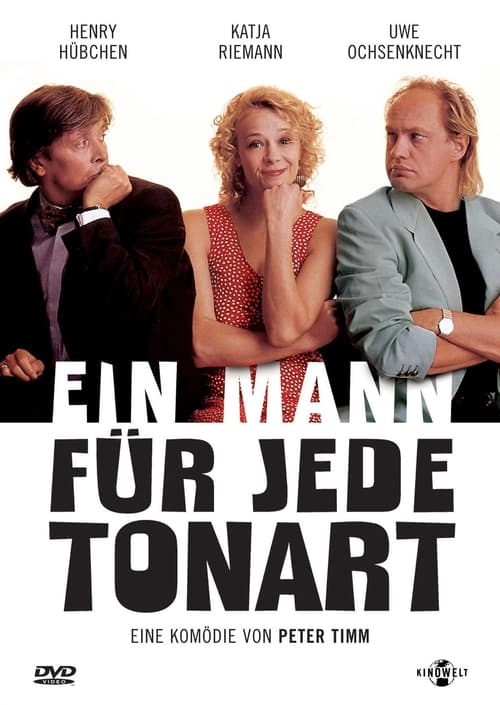
Ein Mann für jede Tonart is a conventional romantic comedy that prioritizes individual pursuits of career and love. While it gives the female protagonist significant professional competence, the narrative remains tied to traditional social frameworks. The film lacks depth, presenting a homogeneous social landscape typical of mid-90s European productions. It does not challenge existing power structures or offer diverse perspectives on identity. Ultimately, the work focuses on interpersonal dynamics rather than social or systemic disruption.
Category Breakdown
The story revolves around a romantic conflict between a female soloist and two male suitors. It follows a traditional structure that assumes everyone is straight, without showing any queer identities.
Pauline is the main driver of the plot through her professional success. However, the central conflict relies on the cliché of choosing between two men.
The narrative appears to reflect a homogeneous social environment. It lacks visible multi-ethnic complexity or depth in its character descriptions.
The film explores Western themes of professional ambition versus private life. It aligns with standard liberal values rather than offering a systemic critique of institutions.
There is no mention of characters navigating physical, sensory, or neurodivergent experiences within the narrative.
Present on Screen
Limited or Absent
Official Synopsis
Vocal soloist Pauline is caught between a rock and a hard place. While her career is finally taking off and she should be putting all her energy into her profession, her private life is becoming increasingly chaotic. Two men, both charming and loving: no wonder Pauline can't decide between the concert critic Georg and the successful doctor Klaus.
2012

1933

2002

2012

2003

1982
2003
1962
No reviews yet. Be the first to share your thoughts on this movie!
Use the rating form above to leave a star rating and optional review.