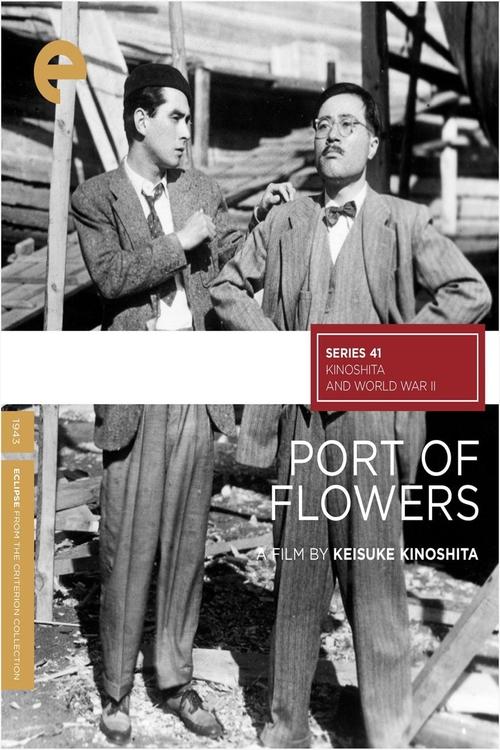
Port of Flowers
1943
No user ratings available yet
Diversity score: 5.2 out of 10
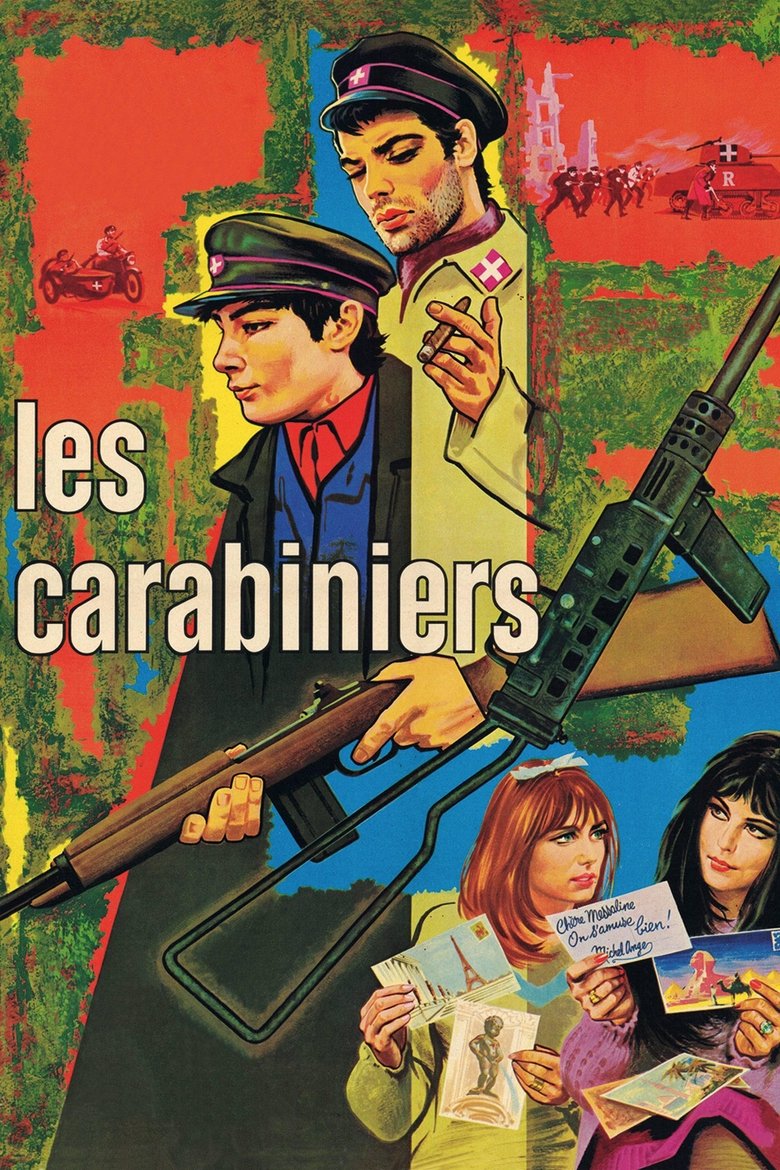
1963
Director
Jean-Luc Godard
Runtime
80 minutes
Average Rating
No ratings yetSynopsis
During a war in an imaginary country, unscrupulous soldiers recruit poor farmers with promises of an easy and happy life. Two of these farmers write to their wives of their exploits.
Overall Score
Fair
Category Breakdown
LGBTQ+ Representation
The film lacks explicit evidence of LGBTQ+ characters or non-heteronormative identities. The narrative focuses on soldiers and their wives, suggesting a traditional framework for relationships.
Gender Representation
The film uses a satirical lens to critique masculine military authority and systemic deception. While women appear through correspondence, they serve to expose the failings of patriarchal institutions.
Racial & Ethnic Diversity
Set in an imaginary country, the film uses abstraction to potentially bypass specific Western racial hierarchies. However, the presence of a diverse cast remains unconfirmed.
Religious & Cultural Diversity
The narrative challenges Western institutions by portraying soldiers as unscrupulous and highlighting class-based exploitation. It prioritizes an anti-authoritarian critique of state power and capitalism.
Disability Representation
There is no mention of characters with visible or invisible disabilities within the narrative.
Strengths
Areas for Improvement
AI Analysis
Jean-Luc Godard’s work functions as a deconstruction of social and political hierarchies. By utilizing an imaginary setting, the film avoids traditional nationalistic tropes, opting instead for an allegorical critique of war and systemic corruption. This intellectual approach prioritizes the subversion of institutional authority over conventional storytelling. While the film excels at challenging state power and class exploitation, it remains limited by a lack of explicit representation regarding race and sexual orientation. The focus on traditional interpersonal structures through soldier-wife correspondence keeps the social scope somewhat narrow. Ultimately, the film's diversity is found in its ideological disruption rather than its character demographics. It uses satire to dismantle the glorification of military structures and the exploitation of the working class.
1943
2016
1996
1963
No reviews yet. Be the first to share your thoughts on this movie!
Use the rating form above to leave a star rating and optional review.