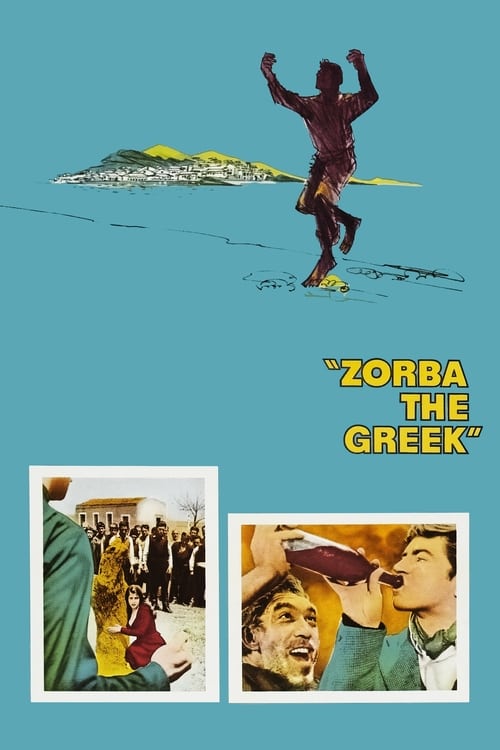
Zorba the Greek
1964
No user ratings available yet
Diversity score: 4.5 out of 10

1929
Director
Eusebio Fernández Ardavín, Nemesio M. Sobrevila
Runtime
77 minutes
Average Rating
No ratings yetSynopsis
Carlos and his girlfriend Carmen are a happy and fun couple; however, his friend León and his girlfriend Luisa are quite the opposite; so Carlos recommends León to visit the mysterious Kamus —an artist, a drunkard, a philosopher—, in the hope that he can free him from his depressing and contagious existential pessimism…
Overall Score
Fair
Category Breakdown
LGBTQ+ Representation
The film focuses on heteronormative pairings between Carlos and Carmen, and León and Luisa. No non-cisnormative identities are present in the narrative.
Gender Representation
Women in the story are defined primarily through their relationships with male protagonists. The film relies on traditional character archetypes for its female roles.
Racial & Ethnic Diversity
The production reflects the demographic realities of the 1929 Spanish-speaking cinematic tradition. Specific casting details regarding ethnic diversity are not provided.
Religious & Cultural Diversity
The narrative prioritizes philosophical skepticism and existential inquiry over traditional religious morality. The character Kamus introduces a secular, relativistic worldview to the plot.
Disability Representation
There is no evidence of physical, sensory, or neurodivergent disabilities being portrayed in the film.
Strengths
Areas for Improvement
AI Analysis
The film functions as a psychological drama that explores the friction between conventional happiness and existential despair. It moves away from purely moralistic storytelling by centering on intellectual skepticism and subjective experience. While the narrative lacks modern intersectional markers like LGBTQ+ representation or visible disability agency, it succeeds in disrupting social equilibrium. The character of Kamus serves as a catalyst for this disruption, embodying non-conformity. Ultimately, the film's value lies in its early exploration of character-driven existentialism rather than traditionalist or escapist themes.
1964
1928

2006

1995
1948

2016

2019
2016

1977
2010

1993
1984
No reviews yet. Be the first to share your thoughts on this movie!
Use the rating form above to leave a star rating and optional review.