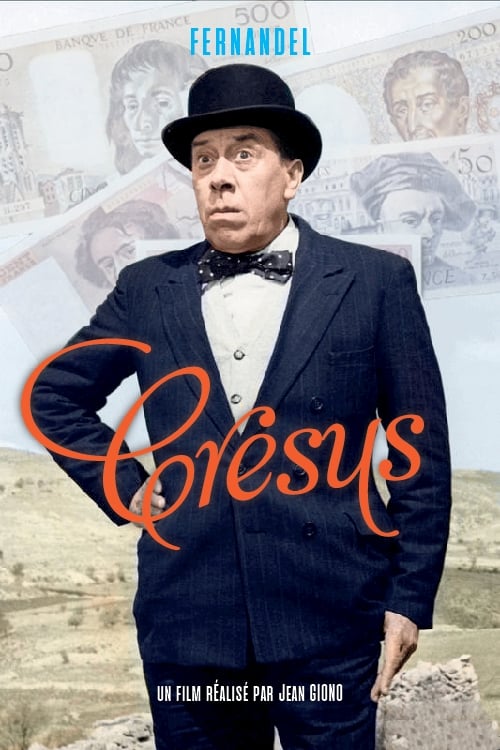
Croesus
1960
No user ratings available yet
Representation score: 2.9 out of 10
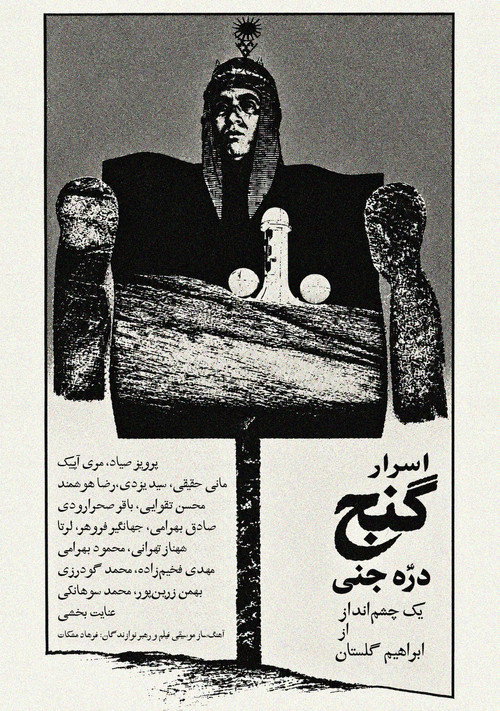
Representation Score
Minimal
1974
Director
Ebrahim Golestan
Runtime
137 minutes
Average Rating
No ratings yetNew Showbiz Analysis
The film opens on a dusty, sun-bleached village where a poor farmer accidentally uncovers an ancient burial chamber. This discovery triggers a satirical cascade of materialism, as the peasant trades his subterranean gold for velvet furniture and lawn statuary, dazzling his isolated community. The camera treats the farmer’s sudden wealth with ironic detachment, highlighting how urban modernity corrupts rural social bonds. The jeweler’s wife, sensing opportunity, arranges a replacement bride for the peasant, reducing women to property exchanged to validate his new status. The state appears only as a bumbling gendarme, unable to impose order on the chaos of sudden wealth. The film’s argument is that materialism destroys traditional community values, but its internal logic remains conservative: the peasant’s moral center is his wife, and his punishment is the loss of his new home. The ending reburies the treasure, restoring the status quo and affirming the primacy of rural tradition over urban modernity. The sold meaning is a critique of materialism, but the film’s resolution reinforces traditional gender and class hierarchies. The last image is a quiet, empty street, rewarding the audience with the triumph of social order over individual ambition. The film is a product of its time, reflecting the anxieties of 1970s Iran about modernization and social change. It is a satirical comedy that uses symbolic language to critique the corruption of rural life by urban wealth. The film’s moral verdict is that traditional values are superior to modern materialism, and that the community’s moral order must be preserved. The film is a testament to the power of tradition over modernity, and the importance of social cohesion over individual ambition.
Category Breakdown
Absent. The narrative relies entirely on heterosexual marriage and traditional rural gender roles; no queer characters, intimacy, or identity markers appear on screen.
The peasant’s wife serves as a passive domestic anchor, while the jeweler’s wife actively arranges a replacement bride to secure her status. Women function as property exchanged to validate the male protagonist’s sudden wealth.
The cast is exclusively Iranian, reflecting the film’s specific national context. No cross-ethnic dynamics or racial hierarchies are depicted beyond the internal class stratification of the village.
The film satirizes the disruption of rural tradition by urban modernity, showing how sudden wealth corrupts local social bonds. The state appears as a bumbling gendarme, while the community’s moral order is restored through material loss.
Absent. No characters with physical, sensory, or cognitive impairments are depicted; the narrative focuses on economic and social status rather than ability.
Present on Screen
Limited or Absent
Official Synopsis
A poor rural farmer unearths an ancient burial chamber loaded with gold artifacts on his arid land, which plunges him into a deep descent of greed and madness. As his growing obsession consumes him, the overwhelming chaos impacts everyone around him.
1960
1974

1935

2016
1970
1970

1964

1958
No reviews yet. Be the first to share your thoughts on this movie!
Use the rating form above to leave a star rating and optional review.