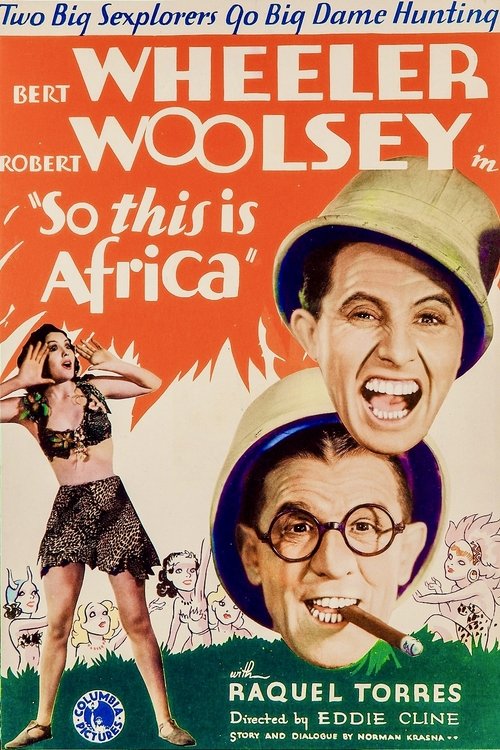
So This Is Africa
1933
No user ratings available yet
Representation score: 1.0 out of 10

Representation Score
Minimal
1923
Director
Ralph Ceder
Runtime
21 minutes
Average Rating
No ratings yetNew Showbiz Analysis
Roughest Africa is a product of its time, reflecting the social hierarchies of the early 1920s. The film’s framework is built on traditional Western adventure clichés and colonialist perspectives common to big game hunt narratives. Representation is limited throughout the film. It lacks characters with non-conforming gender identities and appears to follow conventional gender hierarchies. The setting and premise suggest a reliance on racial stereotypes rather than diverse character's ability to drive the story. Ultimately, the film serves as a historical artifact of early 20th-century cinema, reinforcing the status quo of Western dominance and traditional social structures without attempting to subvert them.
Category Breakdown
The film follows the traditional structures typical of early silent slapstick comedies. There is no indication of characters with non-conforming gender identities or narratives that question traditional sexual orientations.
The story likely adheres to the traditional gender roles common in 1923. Women in the film do not demonstrate intellectual capabilities or challenge the male-dominated leadership structure.
The big game hunt premise suggests a colonialist perspective. The film likely uses racial stereotypes and does not give ability to act to non-white characters in its African setting.
The story aligns with the Western adventure clichés popular in the era. It reinforces the standard depiction of Western exploration and dominance without challenging the colonial status quo.
There is no information available regarding the portrayal of physical or neurodivergent characters in this production.
Present on Screen
Limited or Absent
Official Synopsis
Two bungling adventures go on a big game hunt in Africa.
1933
1979
1933
1962
1928
1923
1933
1947
No reviews yet. Be the first to share your thoughts on this movie!
Use the rating form above to leave a star rating and optional review.