Find another title
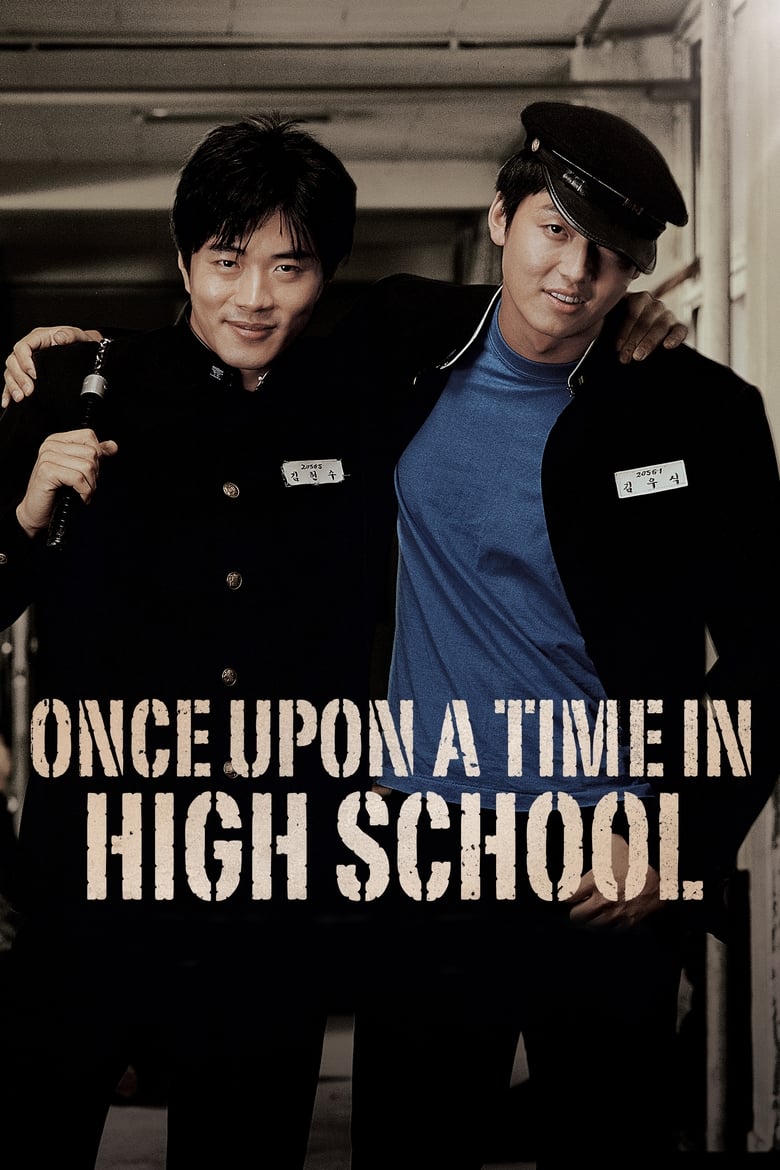
Once Upon a Time in High School
2004
Not RatedDirector
Yoo Ha
Runtime
116 minutes
Average Rating
No ratings yetSynopsis
A model student transfers to the notorious Jungmoon High School known for its severe corporal punishment by teachers and power struggles between school gangs.
Where to Watch
Diversity & Representation
Overall Score
Limited
Category Breakdown
LGBTQ+ Representation
The film operates within a strictly heteronormative framework. There is no presence of LGBTQ+ characters or explorations of queer intimacy, as the story focuses on male bonding and rivalry.
Gender Representation
The narrative centers on a patriarchal social structure and traditional masculine dominance. Female characters lack significant agency, remaining on the periphery of the central power struggles.
Racial & Ethnic Diversity
Set in 1970s South Korea, the cast is ethnically homogeneous. The film reflects the demographic reality of the era without utilizing diverse casting to challenge historical norms.
Religious & Cultural Diversity
The film provides a sophisticated critique of authoritarian institutional authority. It portrays the educational system as an oppressive machine, framing anti-social behaviors as survival mechanisms against corruption.
Disability Representation
There is no significant depiction of physical or neurodivergent disabilities. Characters are defined by physical capability, as bodily strength is central to their social standing.
Strengths
- Offers a sophisticated critique of traditional institutional authority and state-driven oppression.
- Provides an authentic historical reflection of 1970s South Korean social dynamics.
Areas for Improvement
- Lacks representation of female characters, who remain relegated to the periphery.
- Fails to include LGBTQ+ identities or neurodivergent perspectives within the social ecosystem.
- Relies on a strictly patriarchal lens that centers masculine dominance and violence.
AI Analysis
The film is a hyper-masculine period piece that prioritizes systemic critique over demographic variety. While it excels at deconstructing the trauma caused by authoritarian institutions, it lacks intersectional depth. The narrative is heavily skewed toward male-centric violence and social hierarchies. This focus, combined with the absence of LGBTQ+ or disabled characters, limits the film's breadth of representation. Ultimately, the work is a culturally resonant study of institutional oppression that remains narrow in its social composition.
Rate this Movie
Reviews
No reviews yet. Be the first to share your thoughts on this movie!
Use the rating form above to leave a star rating and optional review.