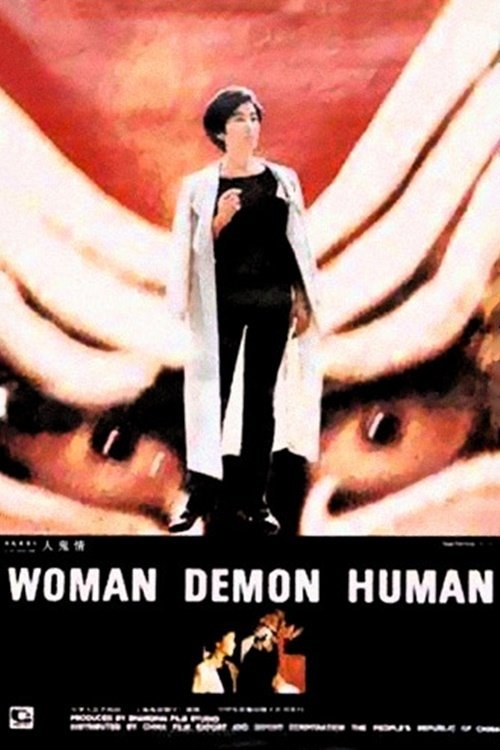
Woman Demon Human
1987
No user ratings available yet
Diversity score: 7.5 out of 10

2011
Director
Herman Yau
Runtime
115 minutes
Average Rating
No ratings yetSynopsis
When the women of her time had their feet bound to please men, Qiu Jin was already questioning the sexual inequality of feudal traditions. Free-spirited and well-educated, she grew up practicing martial arts and was as well versed in poetry as she was in sword-fighting. When this rebellious girl moved to Beijing with her husband, she witnessed how her country was raided and ravaged by foreign powers. With the encouragement of her neighbor Wu Zhiying, the wife of righteous magistrate Li Zhongyue, Qiu Jin left her family behind to pursue study in Japan. There, she met some like-minded schoolmates who shared her ideals, including revolutionary leader Xu Xilin, and secretly joined his anti-Qing cause. After returning to China, Qiu Jin participated in the uprisings staged by Xu Xilin, leading a small group of hot-blooded students against the armed forces of the corrupt Qing government...
Overall Score
Good
Category Breakdown
LGBTQ+ Representation
The film emphasizes female solidarity and the rejection of heteronormative domesticity. While explicit romantic same-sex pairings are not confirmed, the narrative prioritizes female autonomy over traditional marital roles.
Gender Representation
The protagonist subverts gender hierarchies by mastering both poetry and martial arts. She possesses superior physical and intellectual agency compared to the patriarchal structures of the late Qing Dynasty.
Racial & Ethnic Diversity
The cast is ethnically homogeneous due to the Chinese period setting. However, the story provides depth by framing the struggle against foreign powers as central to the protagonist's identity.
Religious & Cultural Diversity
The narrative critiques oppressive feudal institutions and patriarchal family structures. It prioritizes secular political mobilization and revolutionary ideals over established social and religious hierarchies.
Disability Representation
There are no prominent depictions of physical or neurodivergent disabilities that serve as central narrative drivers in this work.
Strengths
Areas for Improvement
AI Analysis
The film serves as a powerful historical deconstruction of feudal constraints. It centers on Qiu Jin, a woman who dismantles traditional expectations of femininity through her pursuit of education and political agency. By juxtaposing the physical restriction of foot-binding against mastery of sword-fighting, the film creates a tension between bodily autonomy and systemic oppression. It successfully shifts from a domestic drama to a revolutionary political narrative. While the ethnic makeup is homogeneous, the film's focus on internal systemic reform and the reclamation of individual agency provides a progressive framework for historical storytelling.
1987

1994
1991
2017
2021
2010
1913
1995
1931

1986

2022
1998
No reviews yet. Be the first to share your thoughts on this movie!
Use the rating form above to leave a star rating and optional review.